
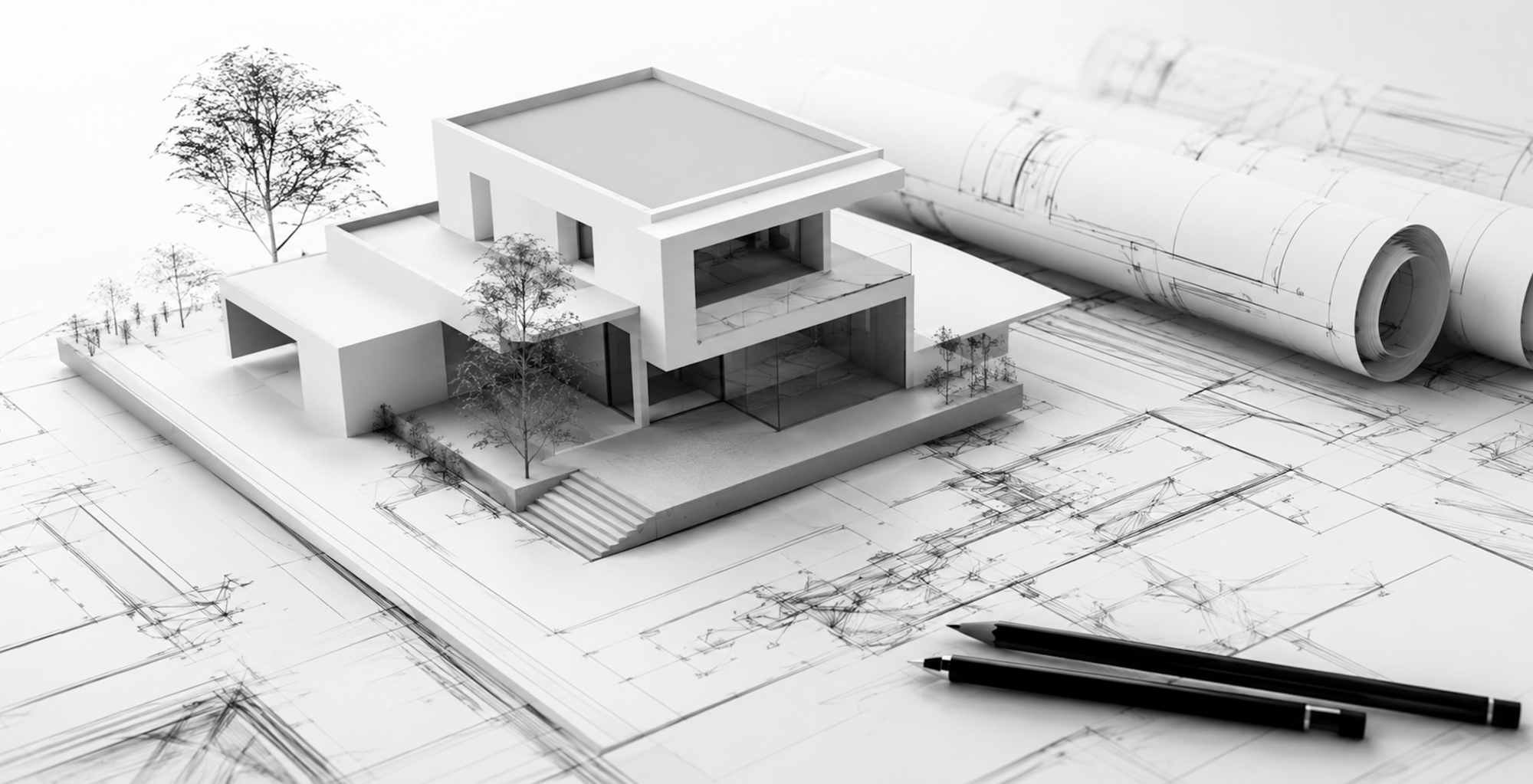

Have you commissioned a study or project from an architect and now want to alter it, incorporate it into a larger scheme and submit it to an authority or an investor? Or are you the architect, disputing with a client over what exactly they may do with your design? In judgment No. 27 Cdo 2857/2019 the Supreme Court clearly defined what the client of an architectural work may do even without further consent from the author – and what, by contrast, the architect must safeguard already in the contract.
In this article we explain how the licence for a commissioned work under Section 61 of the Copyright Act works, why the purpose of the contract is decisive, and what practical conclusions the decision brings for commercial and real estate practice. At Preegal law firm we connect intellectual property law with construction and real estate matters, so this is part of our everyday practice.
What was the dispute about?
The client and the contractor concluded a contract for work that included the preparation of a study of architectural designs. The contractor created an architectural and urban-planning study, which the client then altered, incorporated as part of its own project and submitted to the town of Děčín for planning and building proceedings. The contractor argued that by altering and using the study the client had interfered with its copyright.
The Supreme Court thus addressed a question that troubles architects and their clients in every larger project: was the client entitled to alter the study, incorporate it into its own project and, in that form, provide it for use to a third party? The answer given in judgment No. 27 Cdo 2857/2019 of 6 April 2021 is fundamental for practice and, in many respects, reassuring for clients.
The contract for work and the licence – what applies when you conclude no licence agreement?
The Supreme Court recalled that a licence agreement is usually concluded together with the contract for work. But if no separate licence agreement is agreed – which is common in practice – Section 61 of the Copyright Act applies. It contains a presumption under which the author of a commissioned work grants the client, together with the work, also a licence for the purpose that follows from the contract.
The key insight is that the purpose of the contract need not be expressly agreed. The Supreme Court held that a specific purpose always follows from the contract – usually an economic one, but possibly another. Where an express agreement is missing, assessing the purpose is a matter for the court, which proceeds above all from the content of the contract using the rules of interpretation (today Sections 555 et seq. of the Civil Code).
When interpreting the purpose of the contract, the legitimate interests of the client are to be preferred. The author, by contrast, must refrain from any conduct by which they could jeopardise or harm the legitimate interests of the client arising from the purpose of the contract. Depending on the purpose, the content of the licence may differ substantially – it may include the right to grant a sub-licence to a third party, to assign the licence, or, in justified cases, even the right to change the work, alter it, incorporate it into a collection or combine it with another work.![]()
The core of the decision: what the client of an architectural work may do without further consent?
The most significant conclusion is the one the Supreme Court adopted (in agreement with the commentary literature of Telec and Tůma). Where a contract to create an architectural building work has its usual purpose, the client is not obliged to obtain further consent from the author:
- to make (or to order the making of) reproductions of the work in the form and extent usual before construction begins – that is, in particular, project, implementation and similar documentation, or the making of a model of the building,
- to construct the building itself,
- and this also in a reasonably altered or reworked form, incorporated into a collection or combined with another work.
The only safeguard that remains is the value of the work: the above applies provided it does not amount to a use in a manner reducing the value of the work within the meaning of Section 11(3) of the Copyright Act. The court thus created a balance – the client can work with the architectural work in practice as the purpose of the building requires, but must not devalue the work.
The Supreme Court also expressly noted that it is in principle irrelevant whether, when agreeing the price for creating the work, the author legally unjustifiably expected further profit from subsequent commissions (e.g. for project documentation or the construction of the building). In other words – an architect cannot retrospectively infer that they are entitled to further remuneration merely because they internally counted on it when concluding the contract.
Is a reservation on the invoice enough under the case law?
A practical and often overlooked consequence is that if a contractor wants to restrict the use of its work or charge a fee for further reproductions, it must agree this already in the contract for work. The Supreme Court concluded that subsequent prohibitions by the contractor will not be taken into account. In the case at hand the contractor stated reservations on the invoices, according to which payment of the invoices does not assign copyright, but it did so only after the contract for work had been concluded, and therefore these are not effective reservations within the meaning of Section 51 of the Copyright Act.
The other side of the coin is shown by the earlier judgment No. 30 Cdo 2789/2013. There the client contributed the created project documentation to a company's registered capital without the authors' consent. The Supreme Court held that this was use for a purpose other than the contractual one, that is, conduct contrary to the mandatory provisions of the Copyright Act, and therefore absolutely invalid. The two decisions together form a clear line – what falls within the purpose of the contract, the client may do without more; what exceeds the purpose, by contrast, requires consent.
What to take away from the decision – for clients and architects alike
The judgment strengthens legal certainty on both sides, but imposes something different on each of them:
- The client may, where the contract has its usual purpose, prepare project and implementation documentation, construct the building and reasonably alter the architectural study and incorporate it into its own project without seeking further consent – provided this does not reduce the value of the work.
- The architect (contractor) should, by contrast, remember to agree any restriction on making reproductions of the work, or a fee for further use, already in the contract for work. Later unilateral reservations, typically on an invoice, will not help.
All of this, however, applies only if the study or building is a copyrighted work in the first place. Which buildings and architectural designs enjoy copyright protection, and when they do not, is something we address in the article Which buildings are copyrighted works.
This decision also ties in with the broader topic we discuss in the article Renovating a property as a change to a copyrighted work – while that one concerns changes to a completed building, here we address the licence and purpose already at the moment the work is created. The common denominator is that the architect's copyright lives alongside ownership of the building, and it is prudent to address it in advance, in the contract. You can also use our template contracts.
Right at the intersection of copyright and real estate you will make use of our specialisation at Preegal law firm in intellectual property as well as real estate law and property transfers – from formulating licensing arrangements in the contract for work, through legal due diligence, to negotiations with the architect on the scope of use of the work.
Frequently asked questions
Does the client need a separate licence from the architect to prepare project documentation and to build?
According to the Supreme Court judgment No. 27 Cdo 2857/2019, usually not. Where the contract to create an architectural work has its usual purpose, the client is not obliged to obtain further consent from the author to make reproductions of the work in the usual form and extent before construction begins (typically project and implementation documentation or a model of the building), nor to construct the building itself, even in a reasonably altered or reworked form, provided this does not amount to a use reducing the value of the work under Section 11(3) of the Copyright Act.
Is it enough to restrict use of the work by an additional reservation on the invoice?
No. In judgment No. 27 Cdo 2857/2019 the Supreme Court concluded that reservations the contractor stated only on the invoices (e.g. that payment of the invoice does not assign copyright) were made only after the contract for work had been concluded, and are therefore not effective reservations within the meaning of Section 51 of the Copyright Act. The scope of the licence and any restrictions must be agreed directly in the contract, not added unilaterally later.
Must the purpose of the contract for work be expressly agreed?
Not necessarily. The Supreme Court held that a specific purpose always follows from the contract – usually an economic one, but possibly another. If it is not expressly agreed, the court will assess it from the specific factual circumstances, above all from the content of the contract using the rules of interpretation (today Sections 555 et seq. of the Civil Code). When interpreting the purpose, the legitimate interests of the client are to be preferred; the author, by contrast, must refrain from conduct that would jeopardise those interests.
What if the client uses the work for a purpose other than the contractual one?
Using the work for a purpose other than the contractual one – for example contributing the project documentation to a company's registered capital without the authors' consent – is conduct contrary to the Copyright Act that may be absolutely invalid. By contrast, use in line with the purpose of the contract (see the Supreme Court judgment No. 27 Cdo 2857/2019) requires no further consent. The boundary between the two is therefore decided precisely by the purpose that follows from the contract.
Dealing with a licence to an architectural work, a dispute with an architect or a contract for work? Get in touch with us.
In intellectual property as well as real estate law and property transfers we will set up the licensing arrangements in the contract for work, assess the scope of the client's entitlement and, in the event of a dispute, represent both clients and architects. Before you sign anything, contact Preegal law firm and discuss your plan with us.