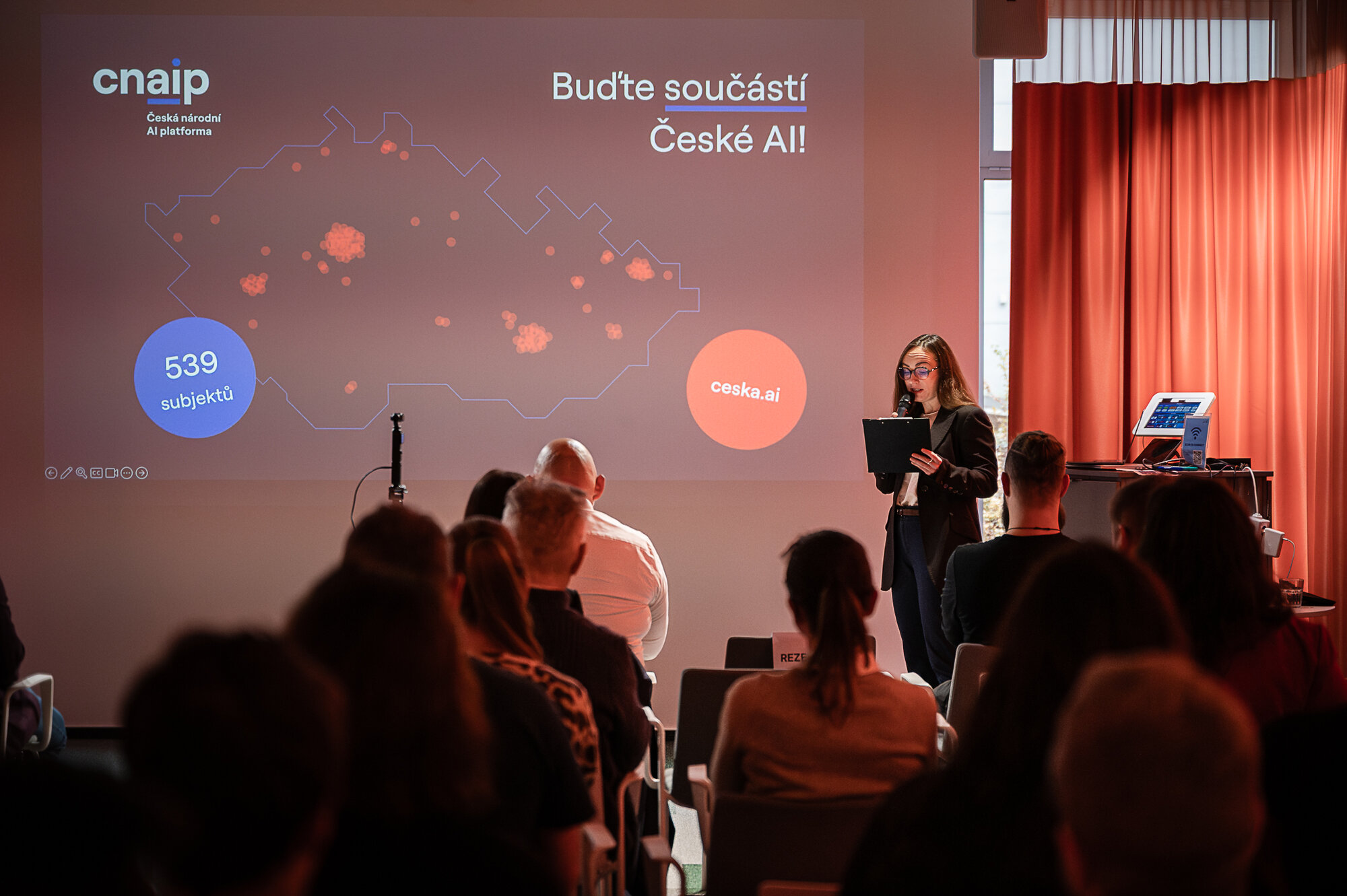
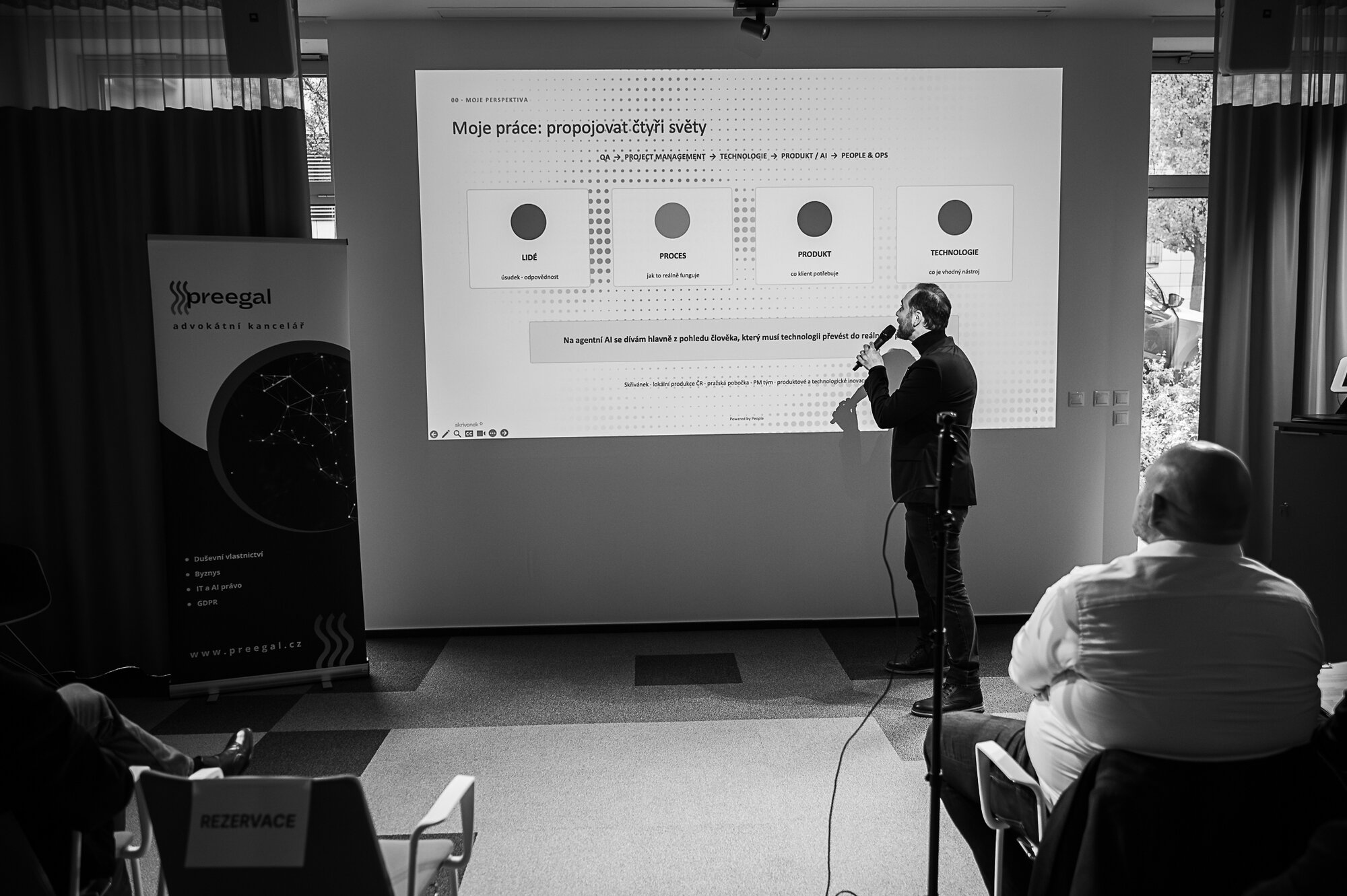
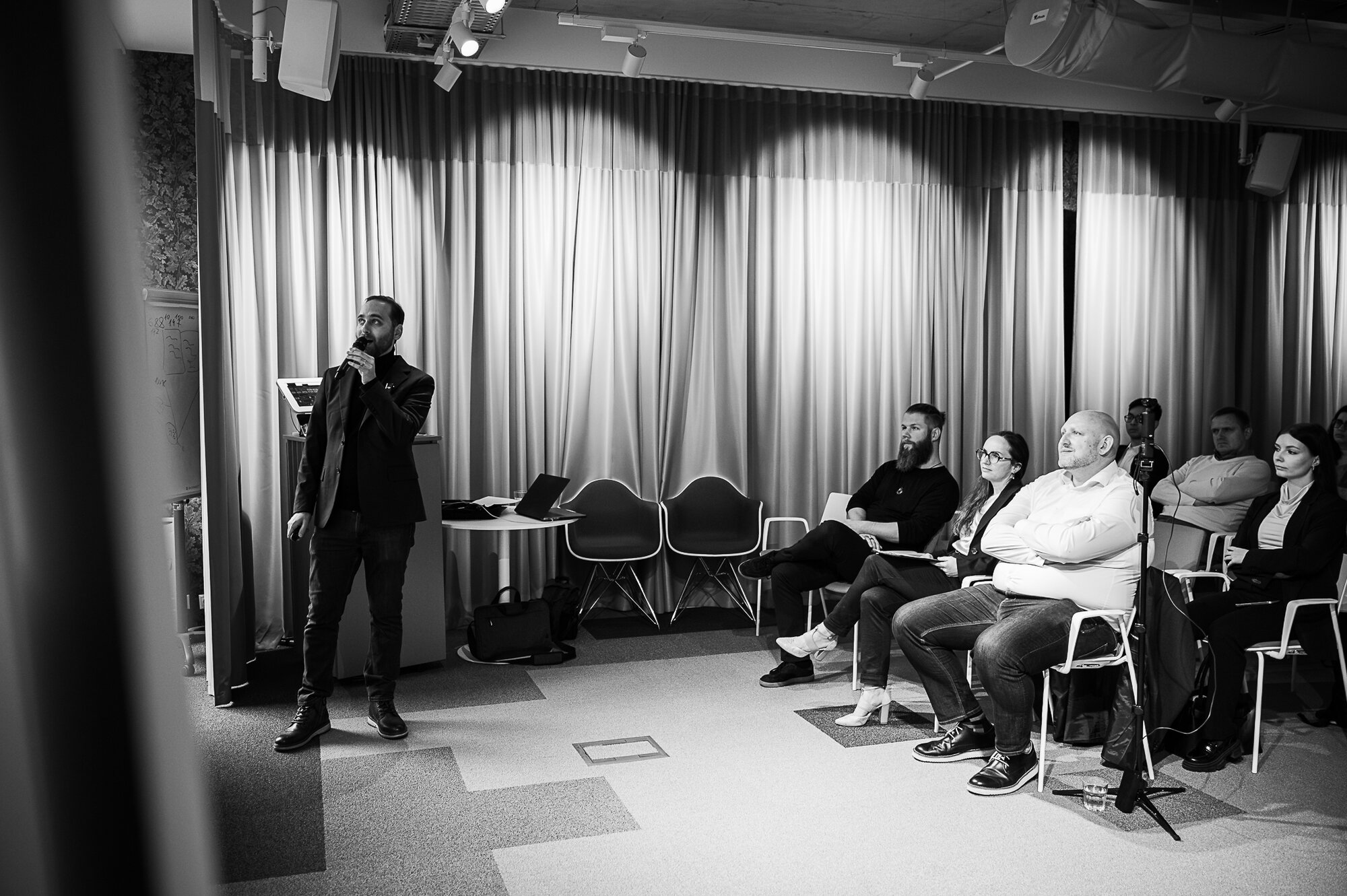
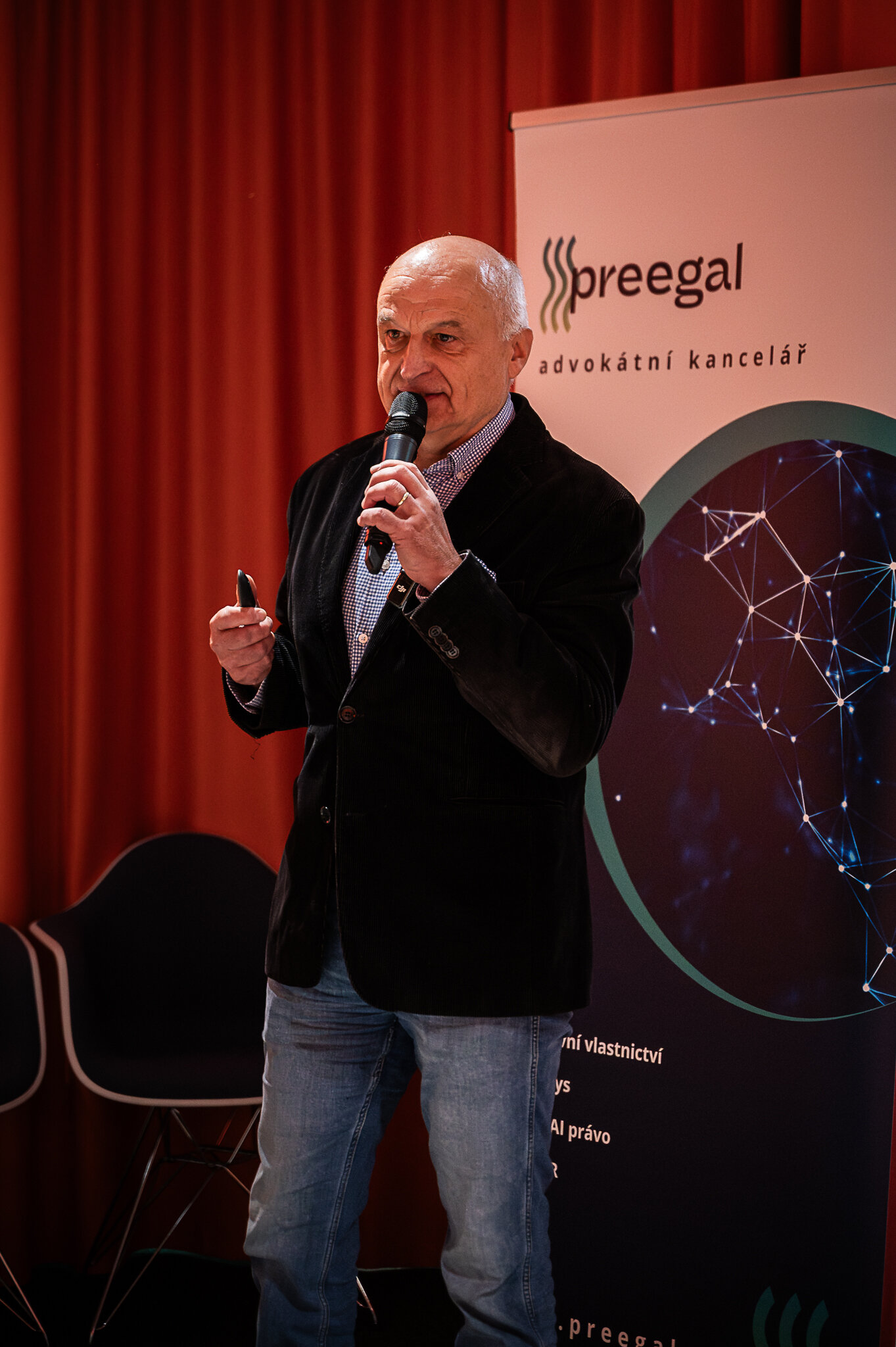


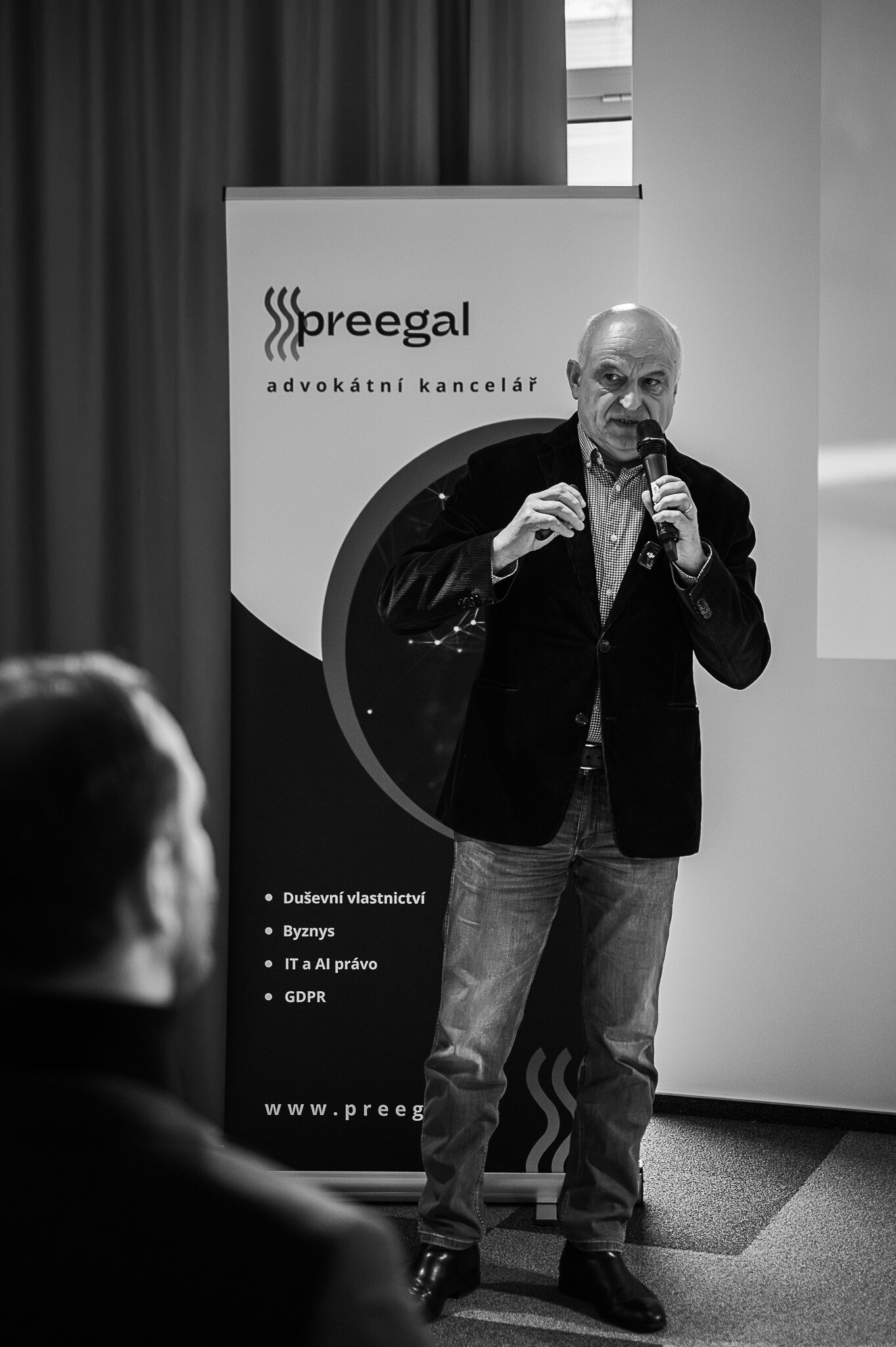
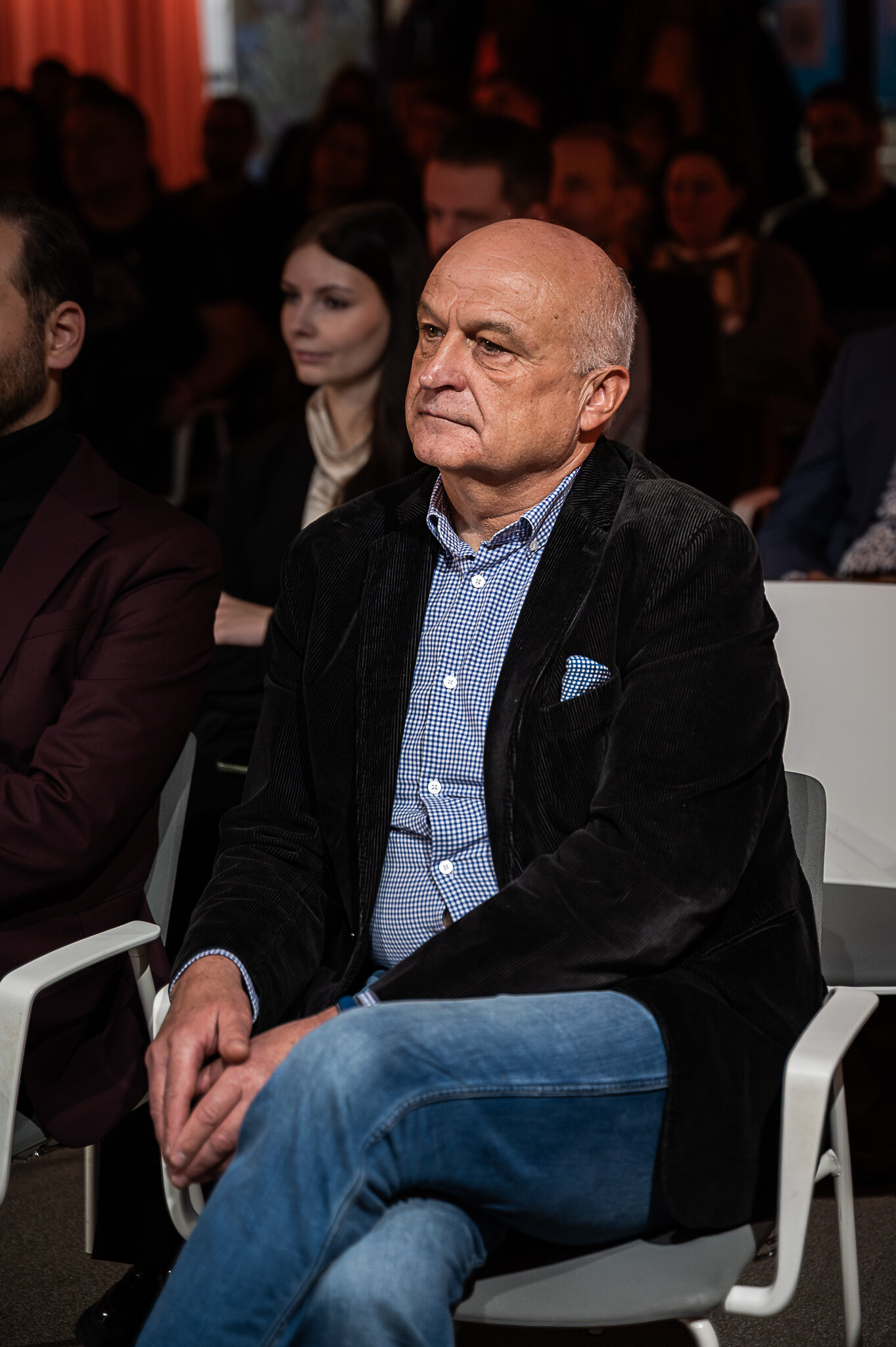
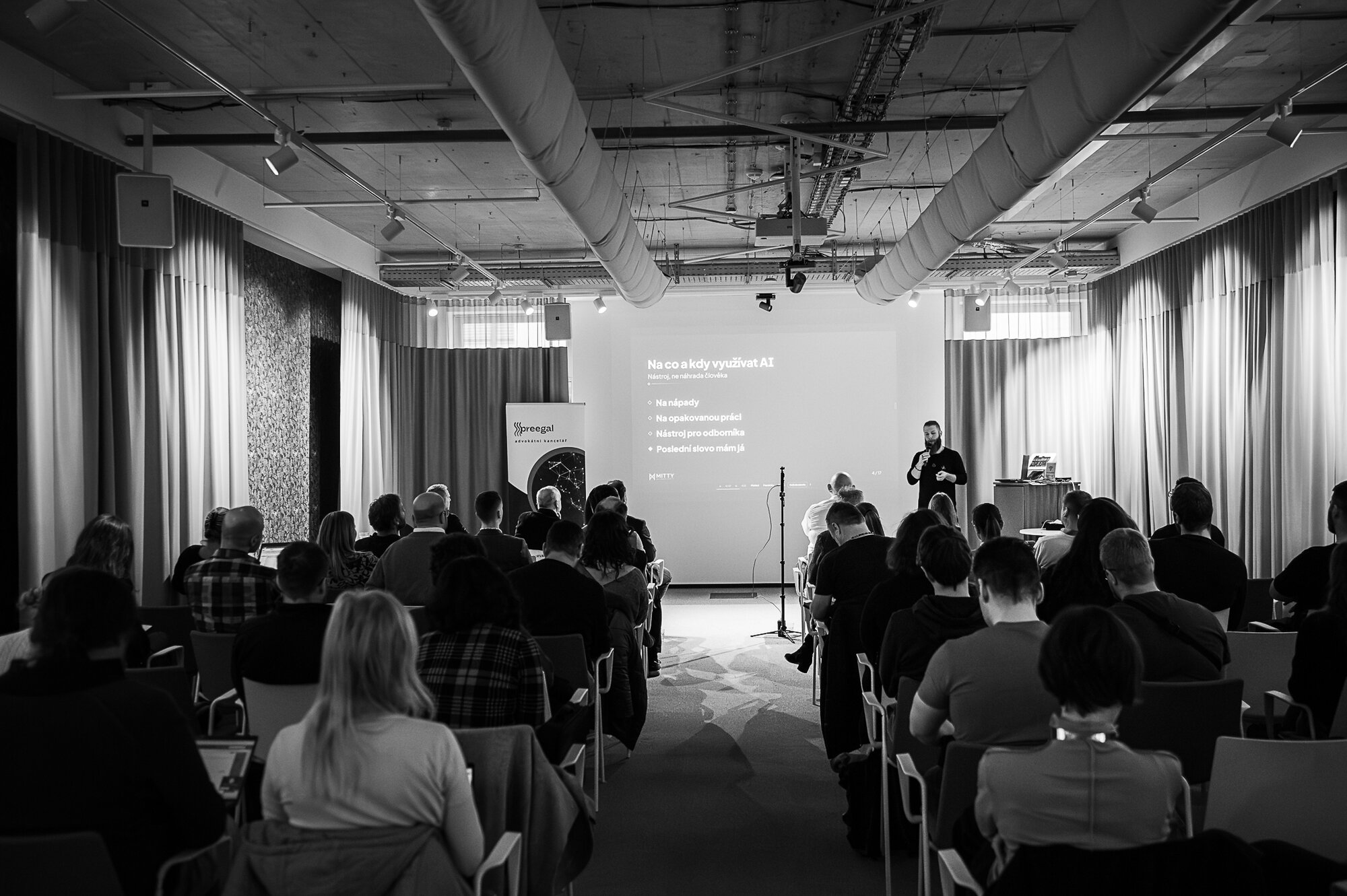
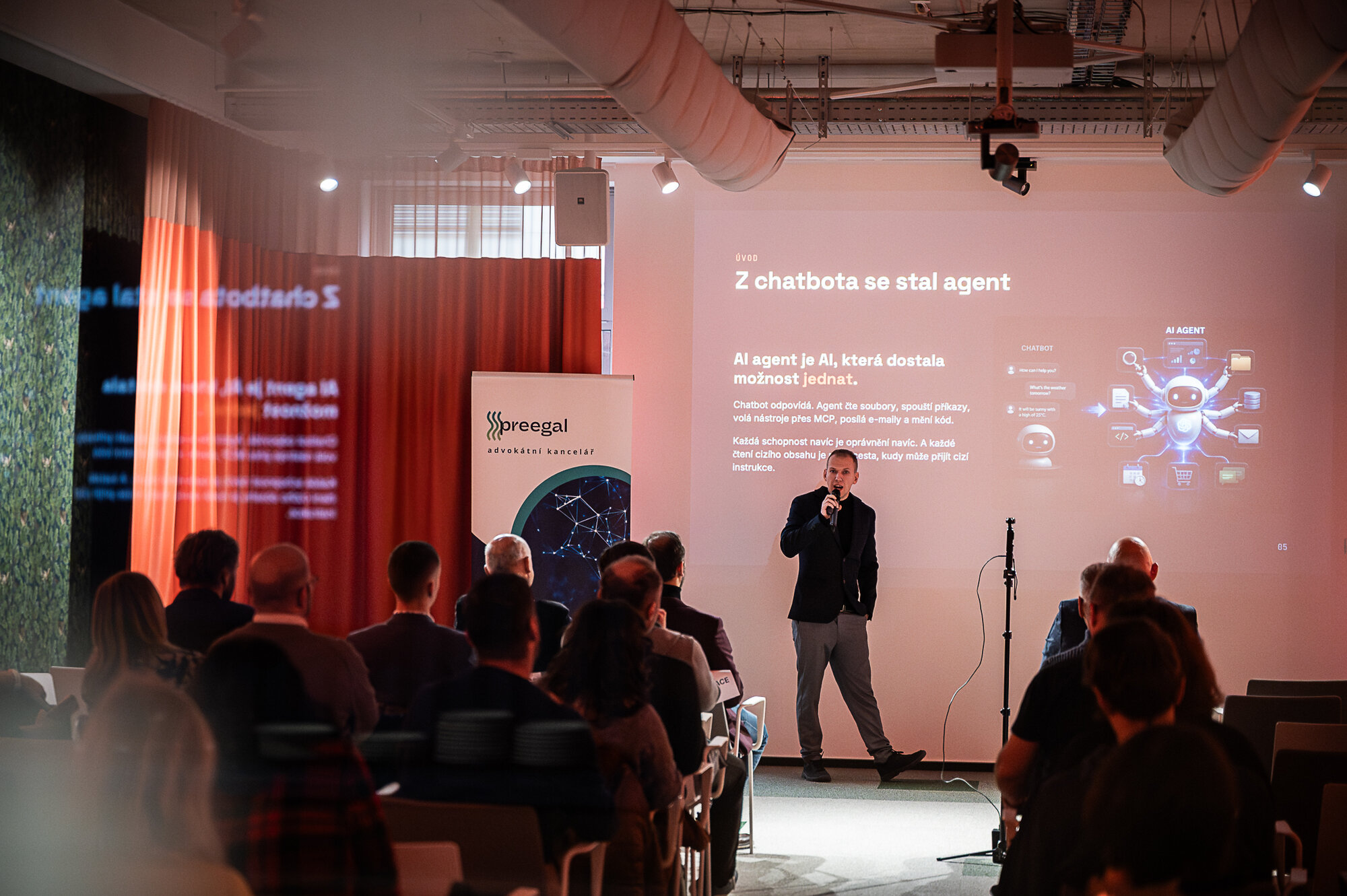
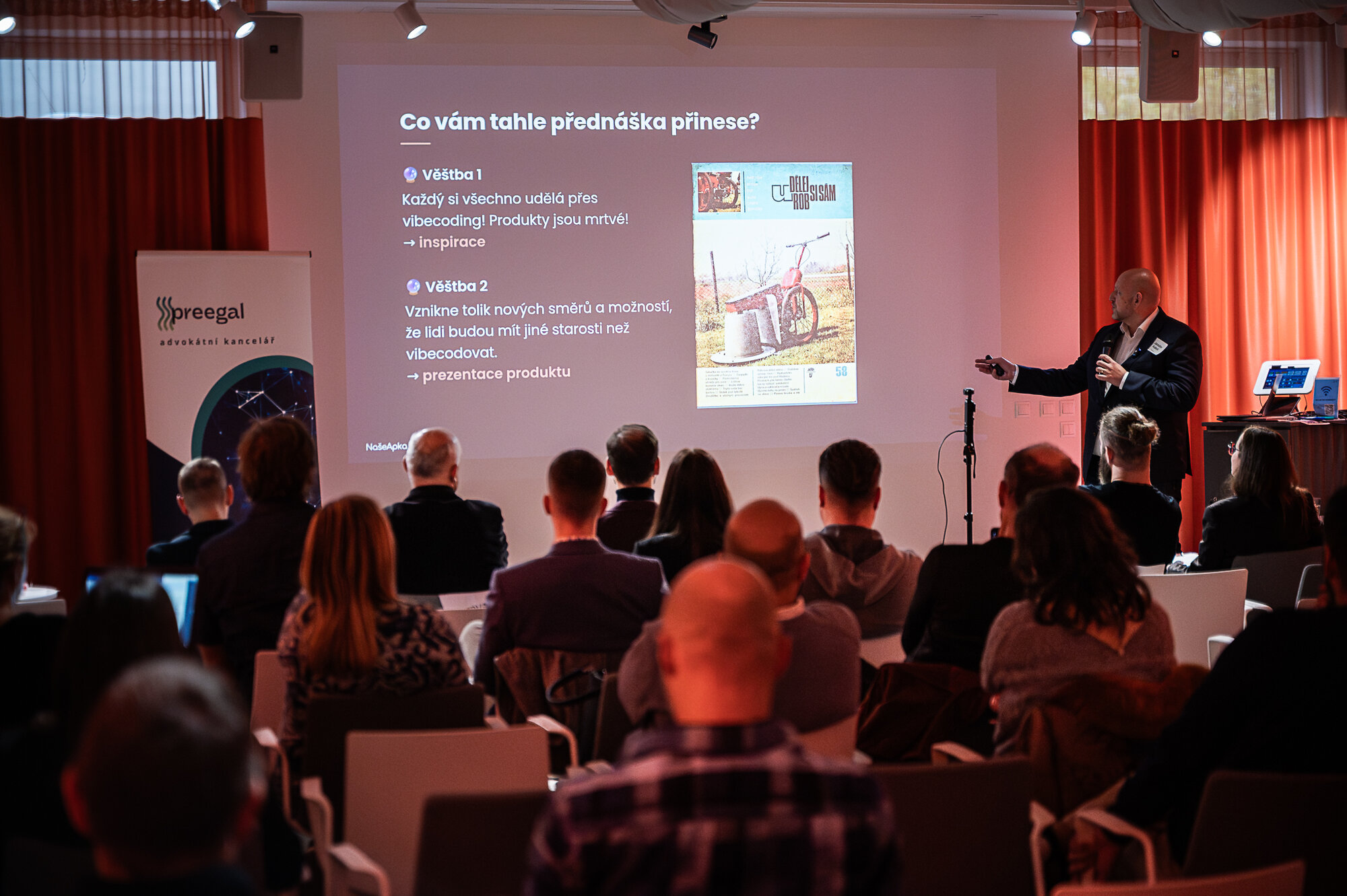
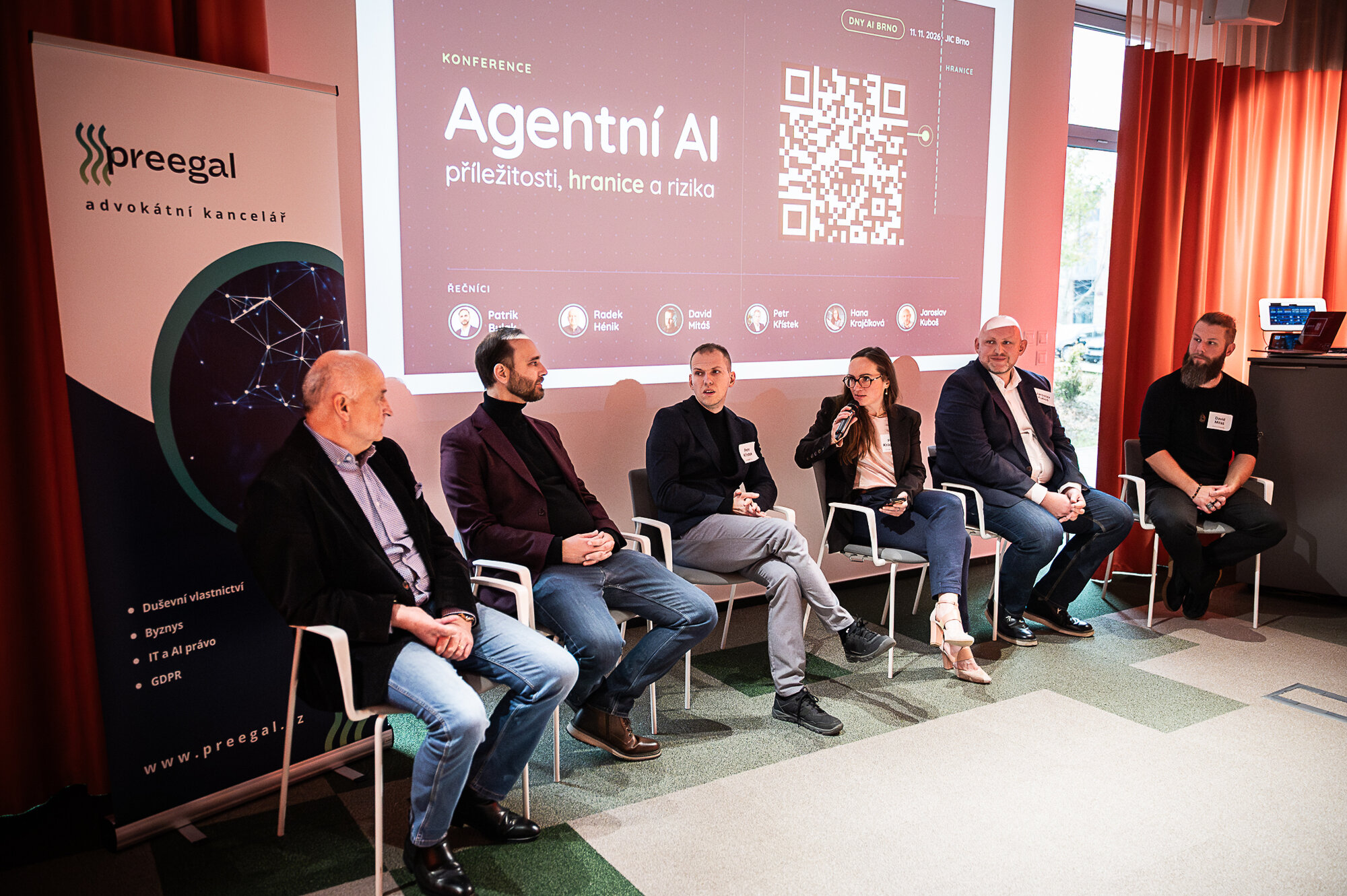
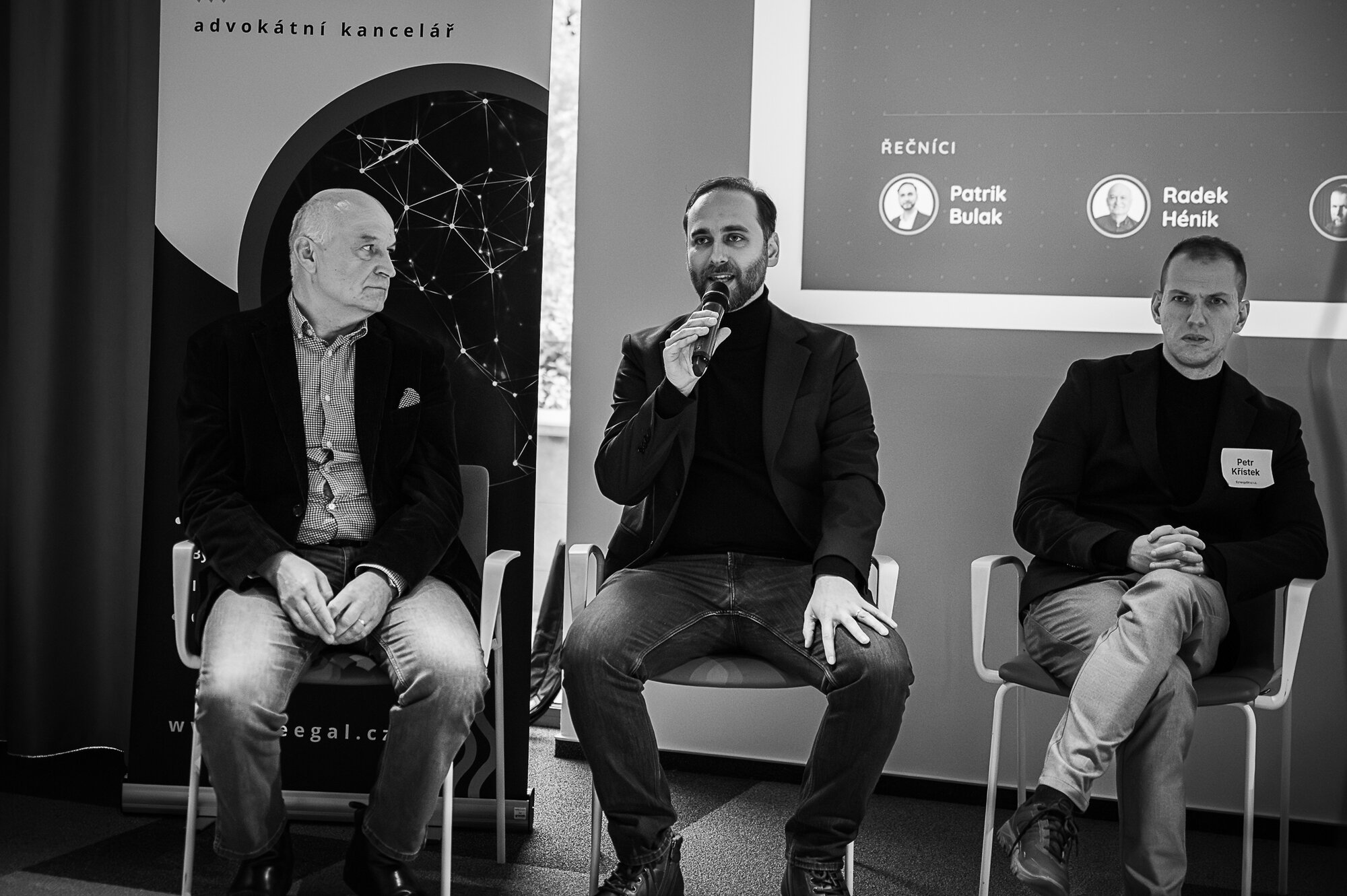
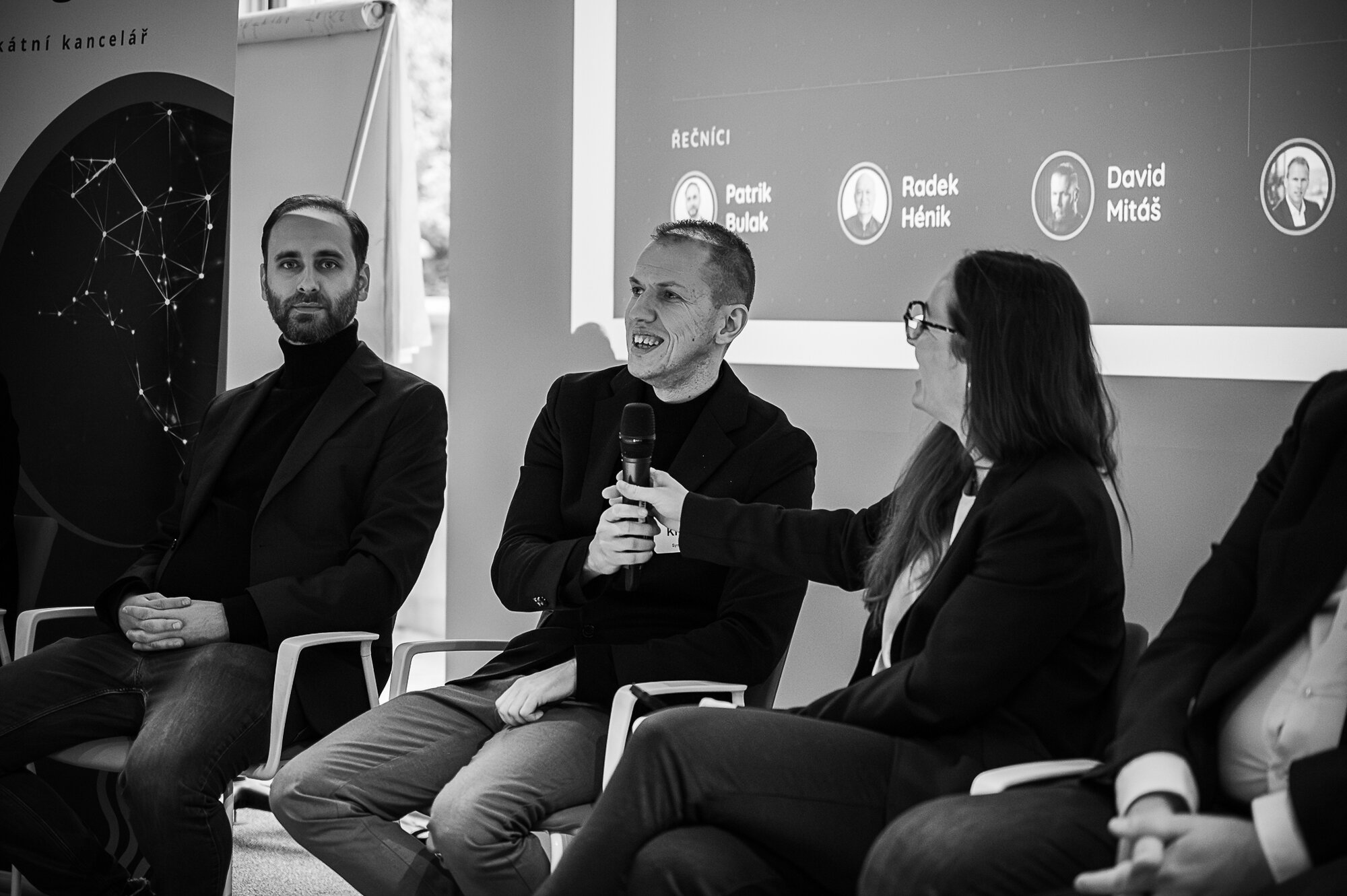
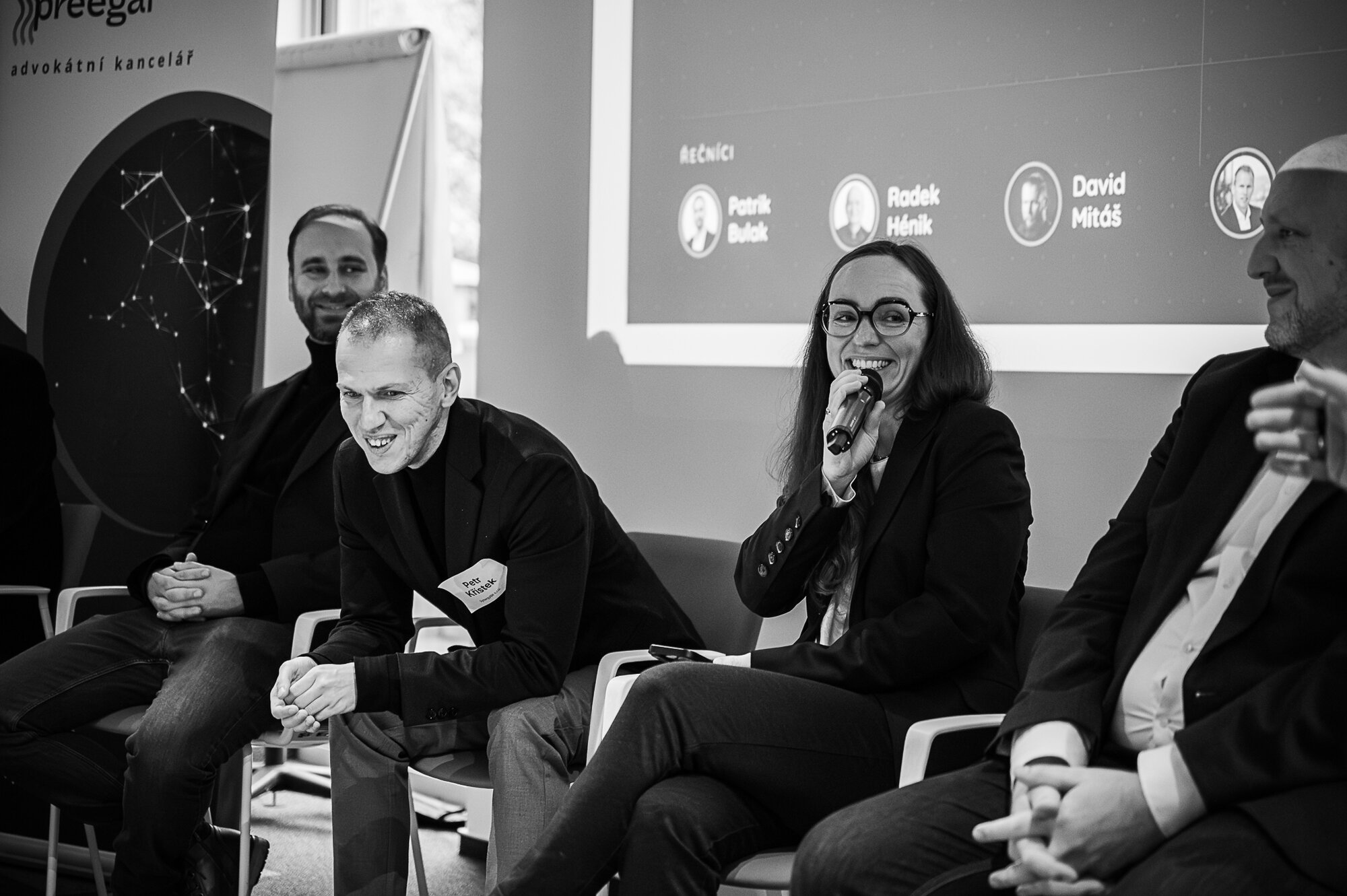
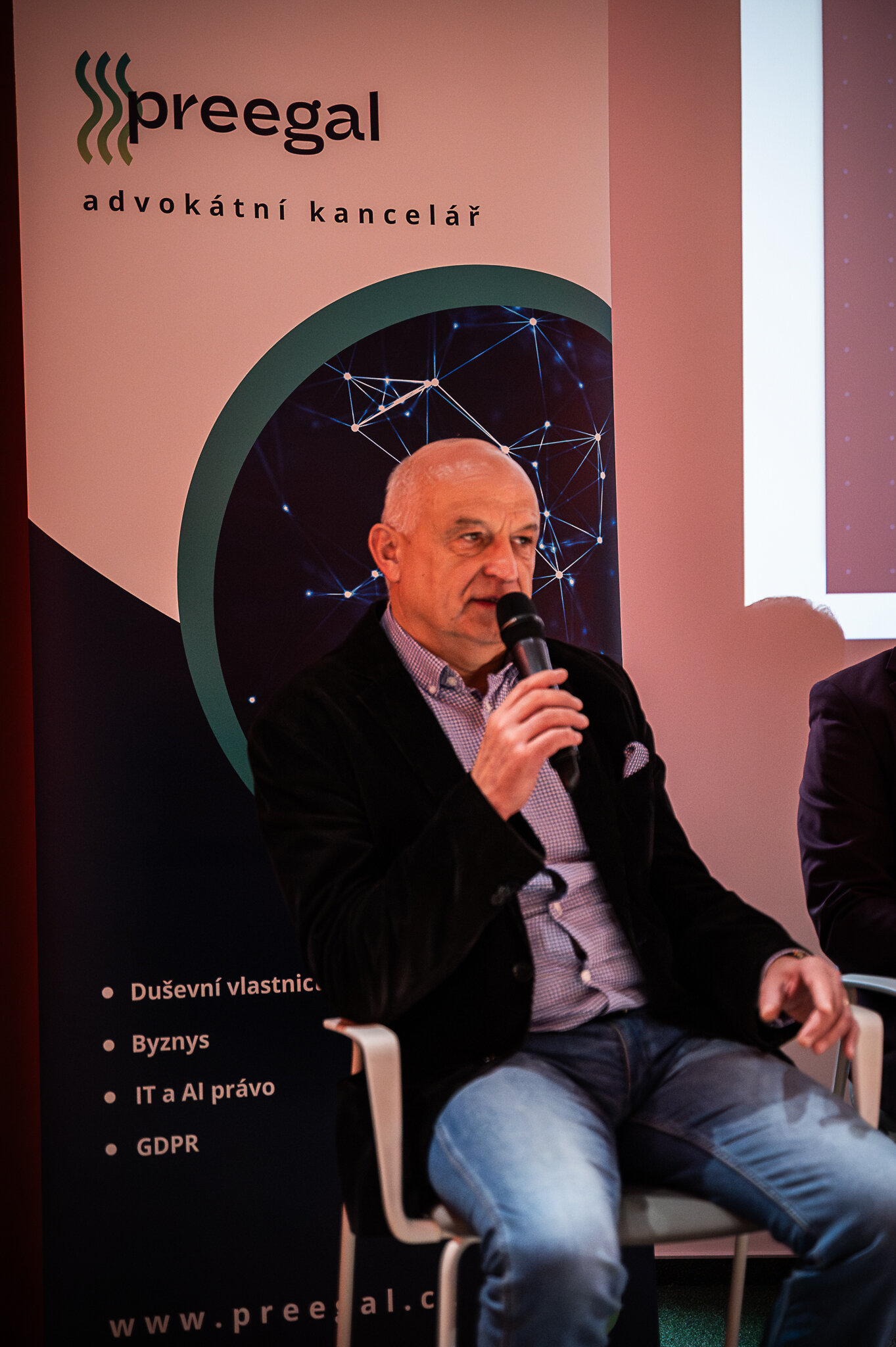
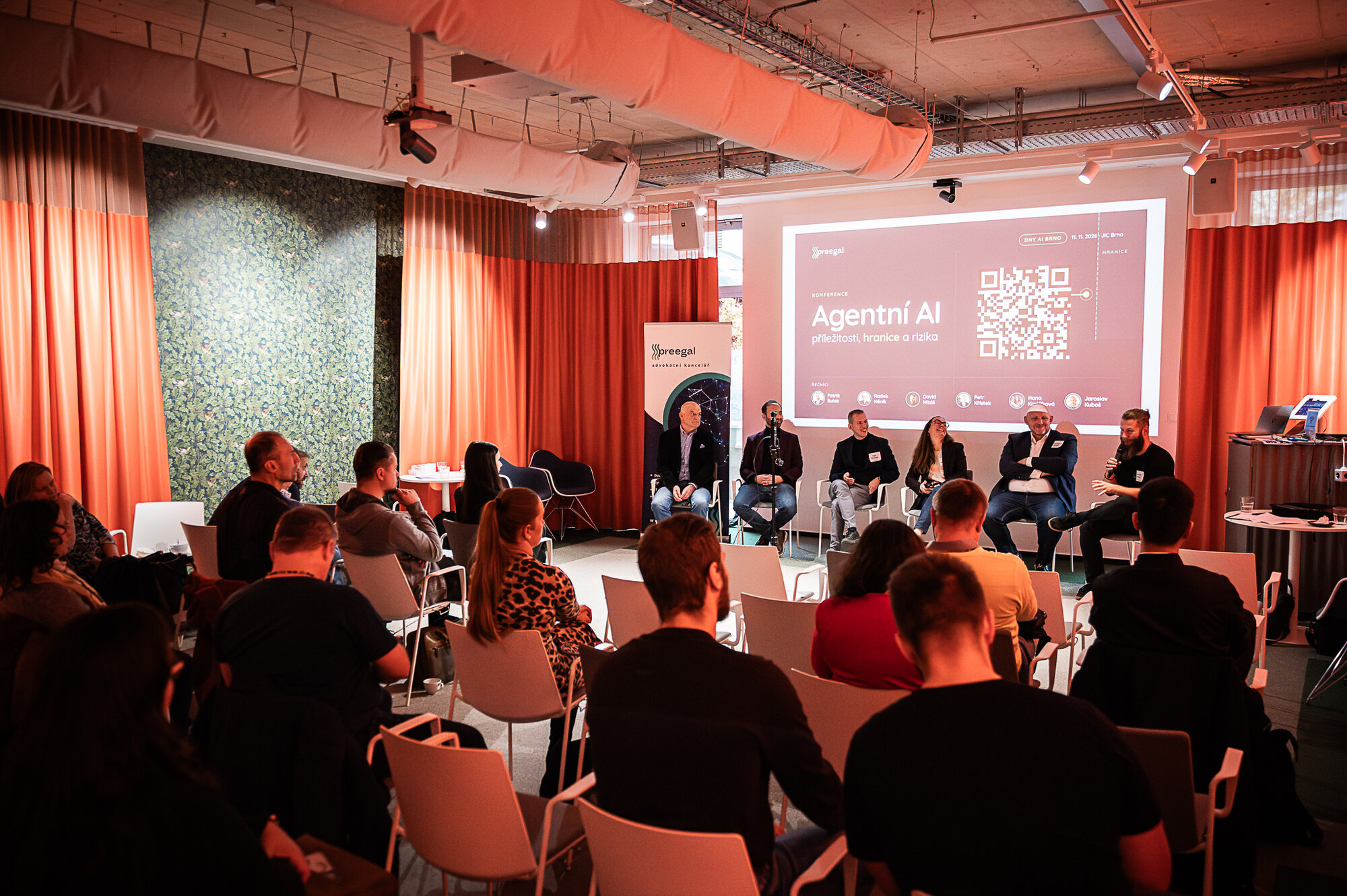
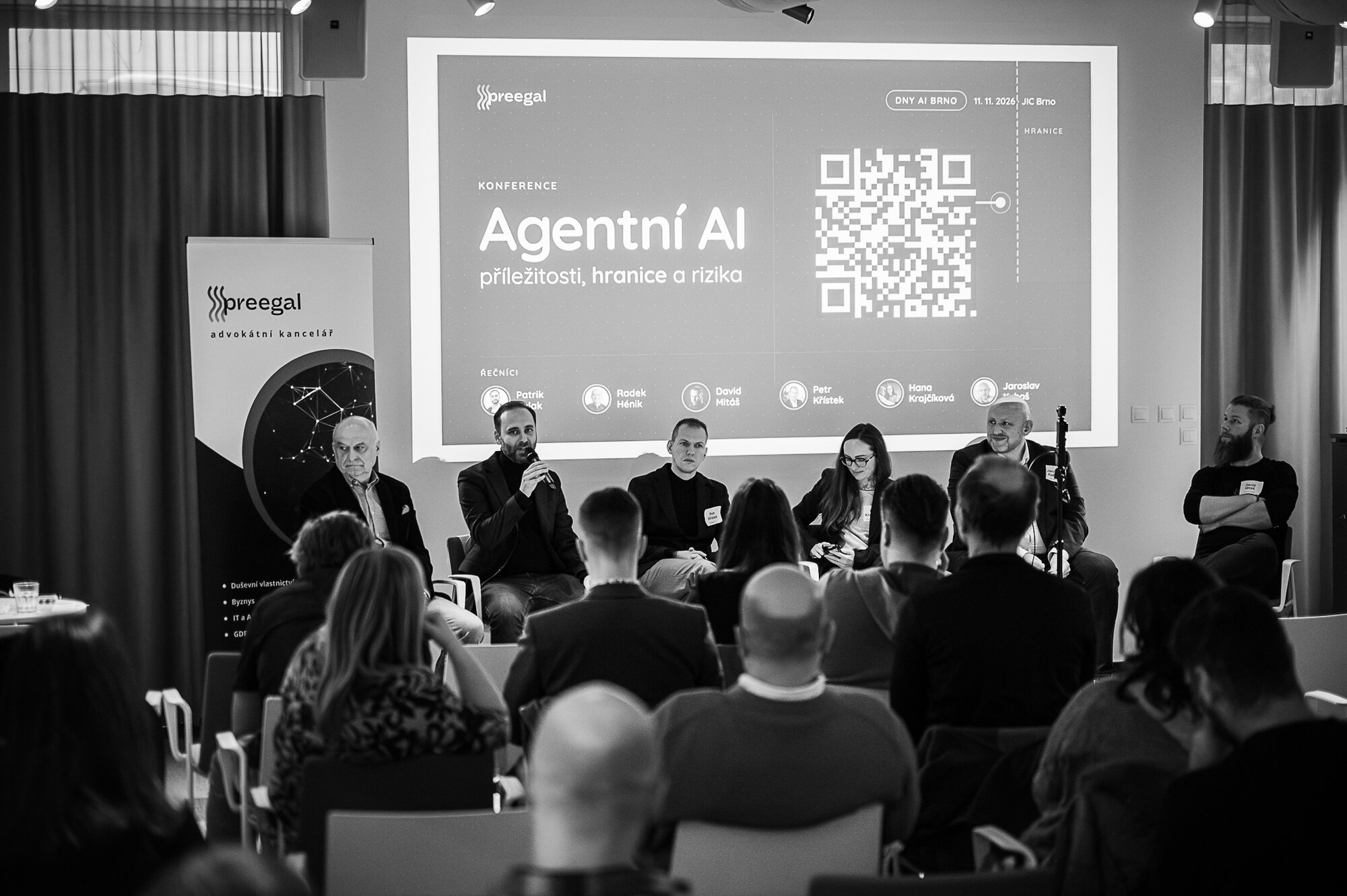
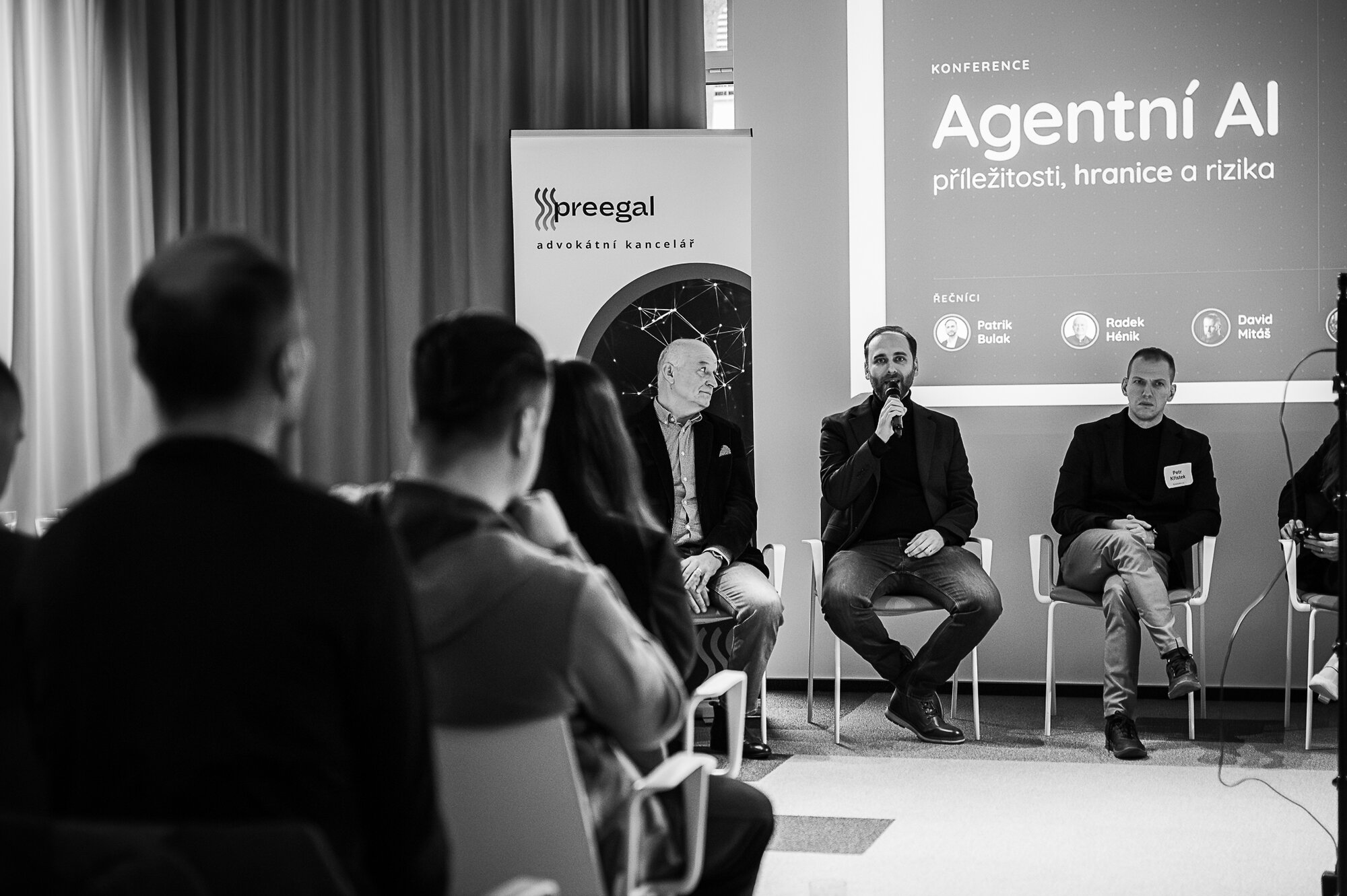

AI agents no longer just give advice. They process orders, communicate with customers and trigger processes on their own. What do companies need to watch out for when they entrust them with real work? That was the question at the heart of the conference Agentic AI – Opportunities, Limits and Risks. The Preegal law firm organised it on 11 November 2026 at JIC Brno as part of Brno AI Days.
Six speakers brought together perspectives that cannot be separated when deploying agents: practice and business value, cybersecurity and legal liability. The talks were followed by a panel discussion with questions from the audience, and the morning ended with networking.
“Good evening, Pavla, thanks for today’s event. I wanted to tell you that I’ve been to several AI events, both within AI Days and elsewhere, and yours stood out in quality – interesting content, and the speakers knew how to present it well. So just a little Wednesday praise :) Have a nice evening.”
Iva, conference participant
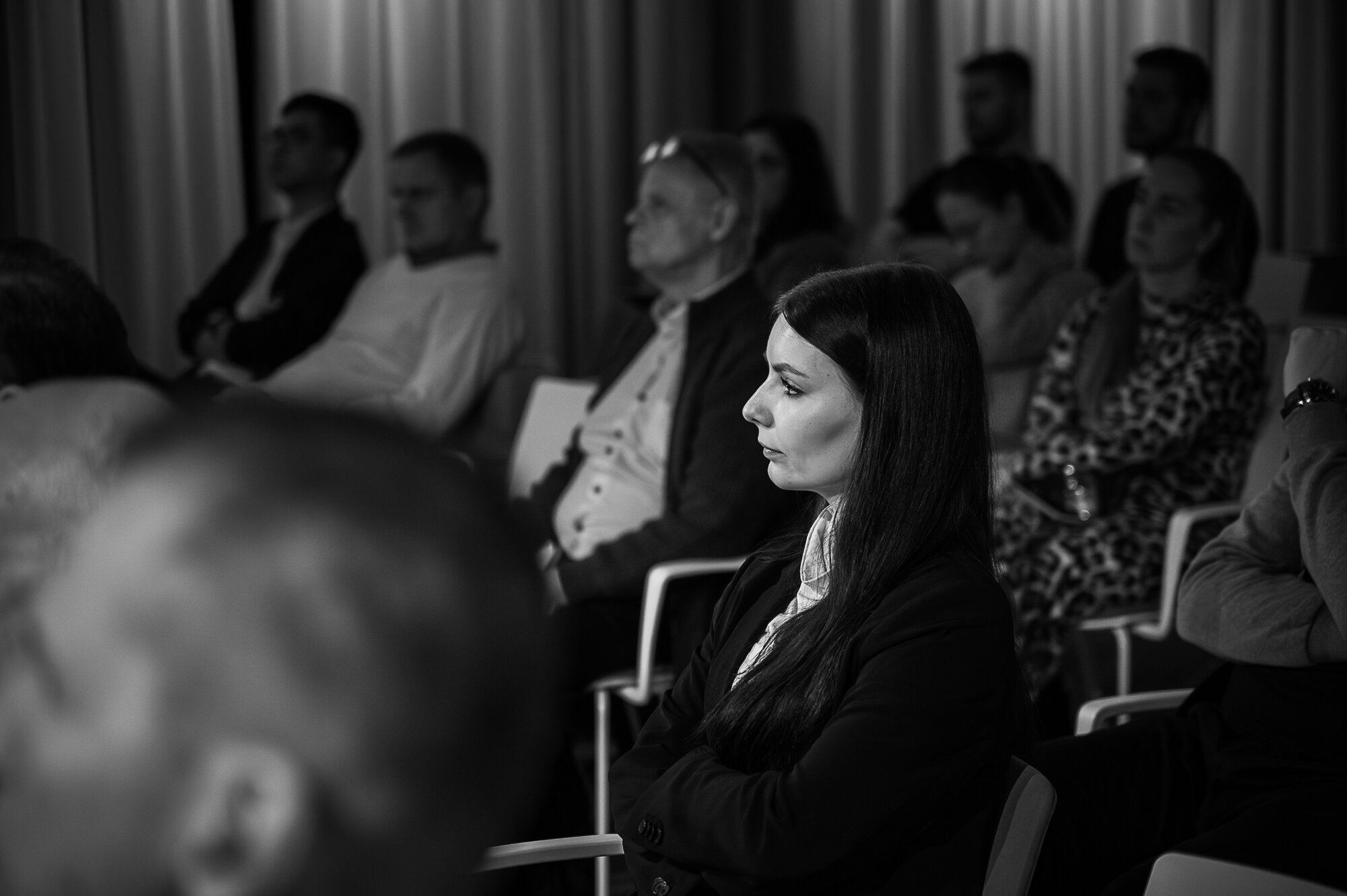
We are delighted by feedback like this. It belongs above all to the speakers, who shared their experience and presented it clearly and engagingly, and to you, the participants, for your interest, great questions and lively discussion. Thank you!
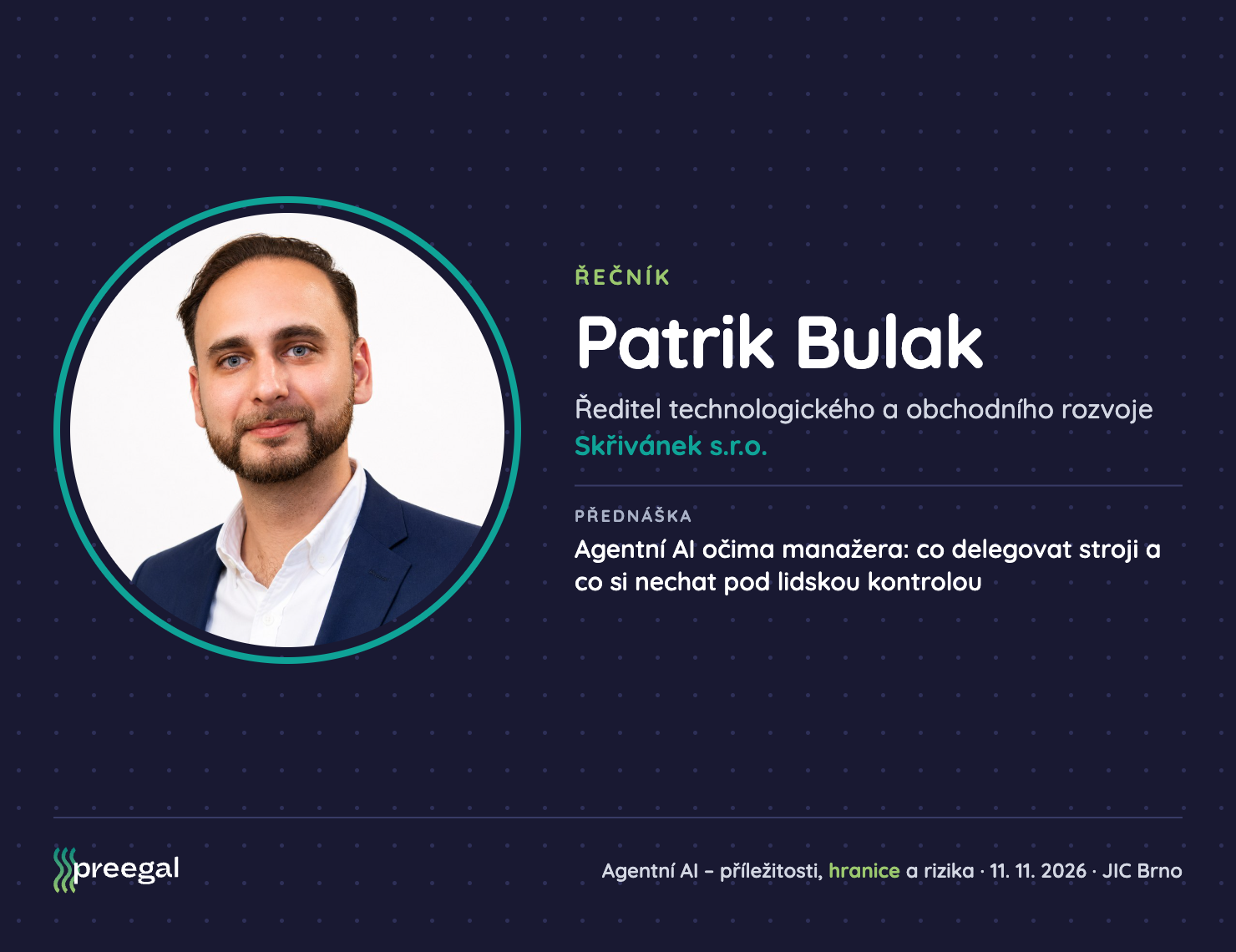
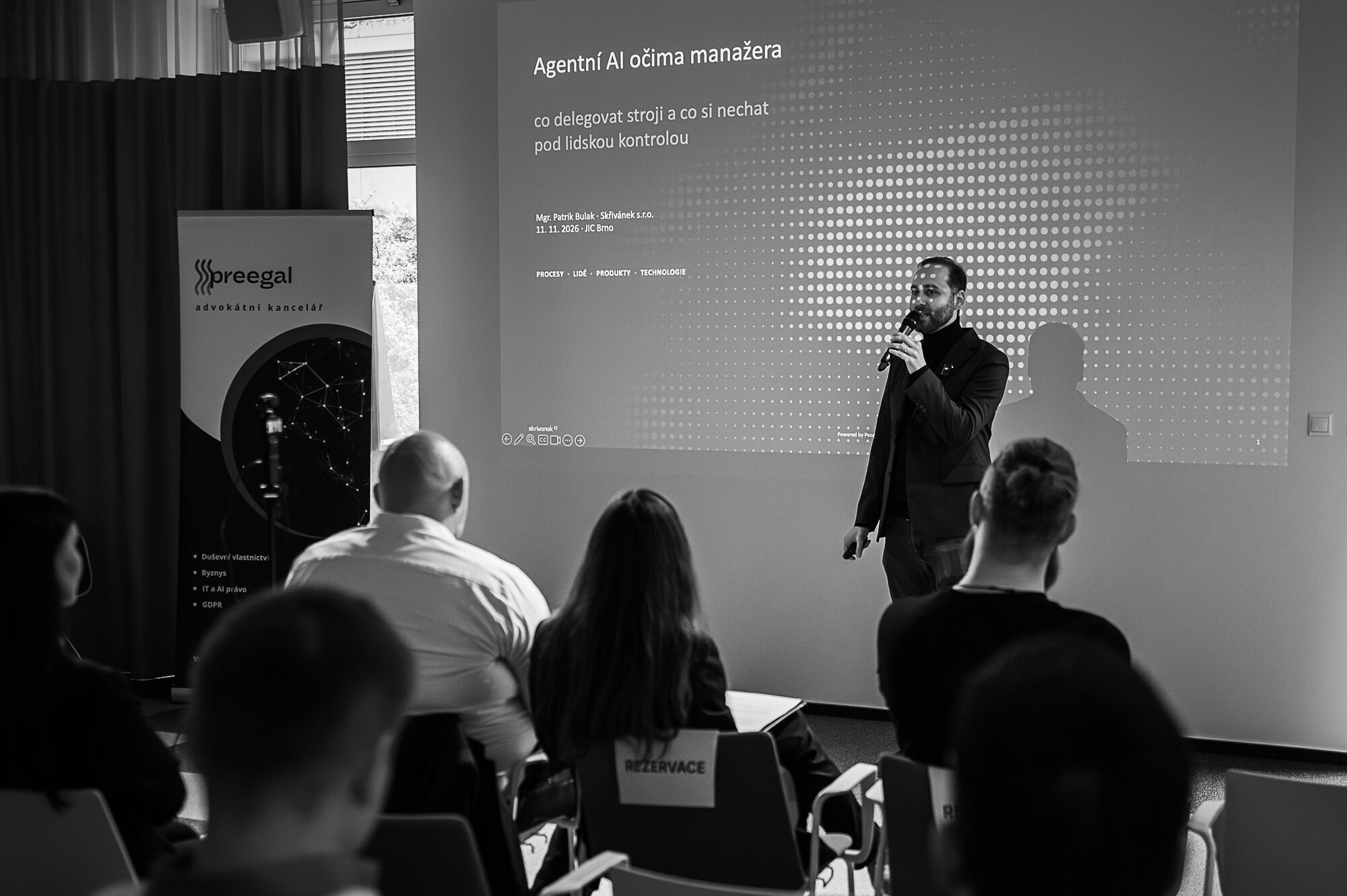
Patrik Bulak (Skřivánek): Agentic AI Through a Manager’s Eyes
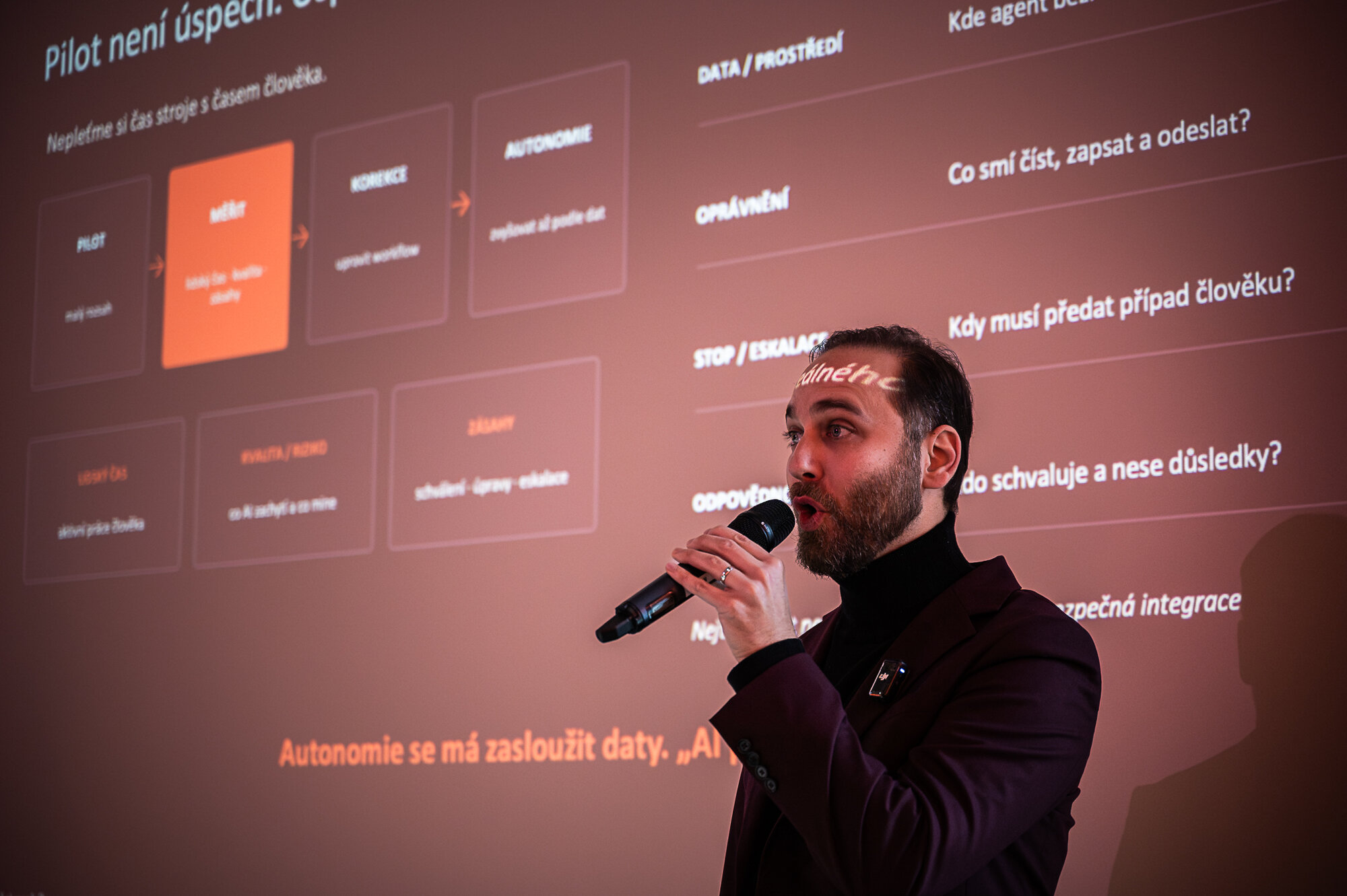
Patrik Bulak looked at agents through the eyes of a manager who has to bring the technology into real operations. A chatbot answers, a copilot assists, an agent acts within a process – so with agentic AI we no longer check just the answer, but also the action. The rule should be “process first, agent second”, because a bad process with AI is just a faster bad process.
Using an upcoming pilot by Skřivánek and Futured, he showed an agent for simple enquiries: it checks the details, asks follow-up questions or escalates to a human, and prepares a reply that a human approves before it is sent. He derives the level of autonomy from the purpose and the risk, and only increases it based on data – measuring active human time, quality and the number of interventions. “Autonomy has to be earned with data.”
Key idea: delegate to the machine what is repeatable, measurable and controllable. Leave judgement, exceptions, relationships and responsibility to people. “Let’s automate work. Not responsibility.”
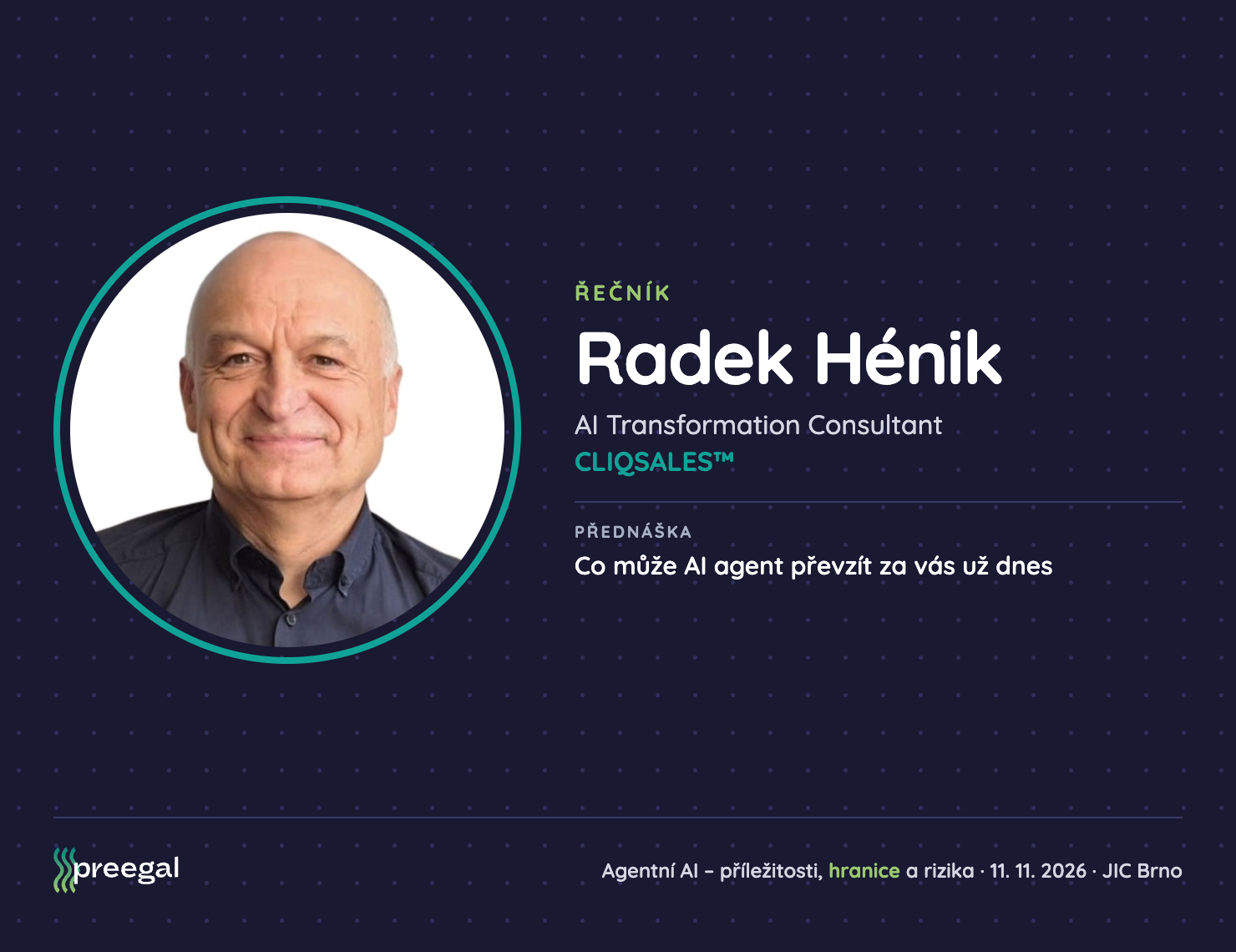
Radek Hénik (CLIQSALES): What an AI Agent Can Do for You Today
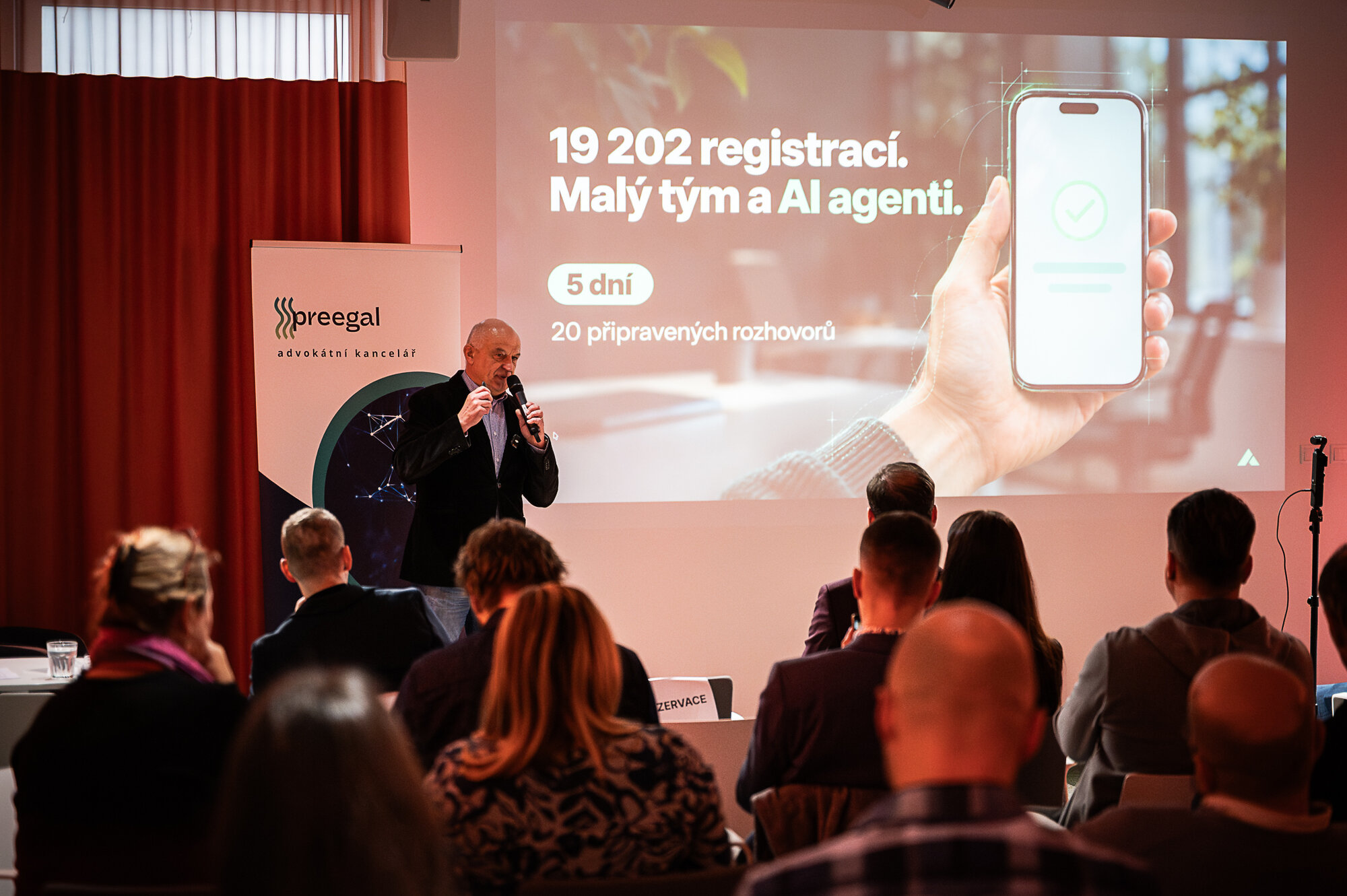
Radek Hénik showed how a small team used AI agents to prepare the five-day online AI Transformation Summit: the communication plan, registrations, e-mails and text messages, briefs for twenty interviews, as well as scripts and slides. The event had over 19,000 registrations, and the agents wrote, for example, more than 4,000 personal letters to participants, each tailored to their company.
The rule was clear: nothing went out without a human, and every message went through a draft, a preview and a test. He also spoke openly about what did not work – an agent does not notice on its own that it is repeating itself, and numbers without a source tend to be wrong.
Key idea: the agent is the fastest member of the team, you just have to give it rules. What matters is not one smart agent, but a system in which agents work with the same data and rules and a human oversees every step. The goal is not to have more AI, but to get time back.
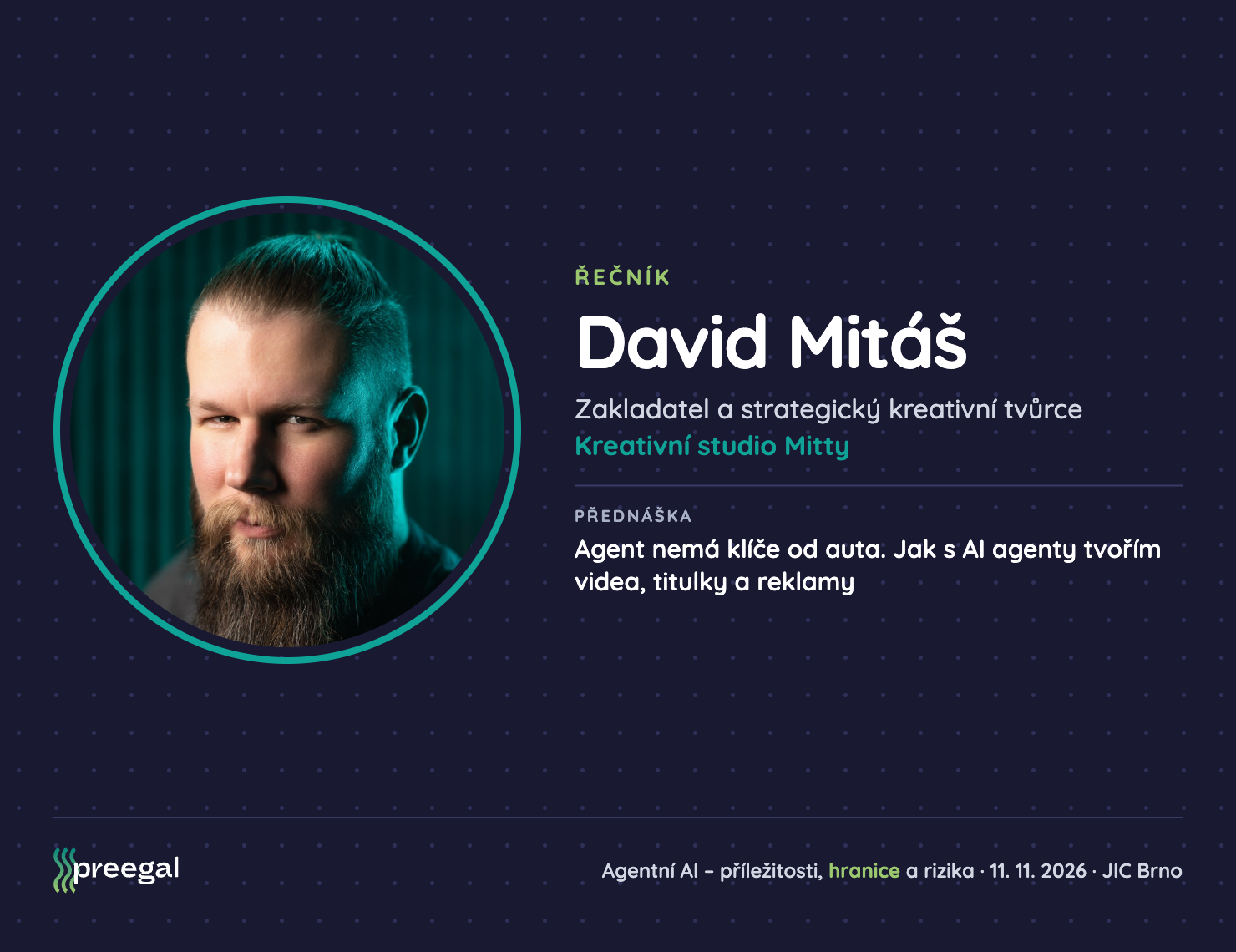
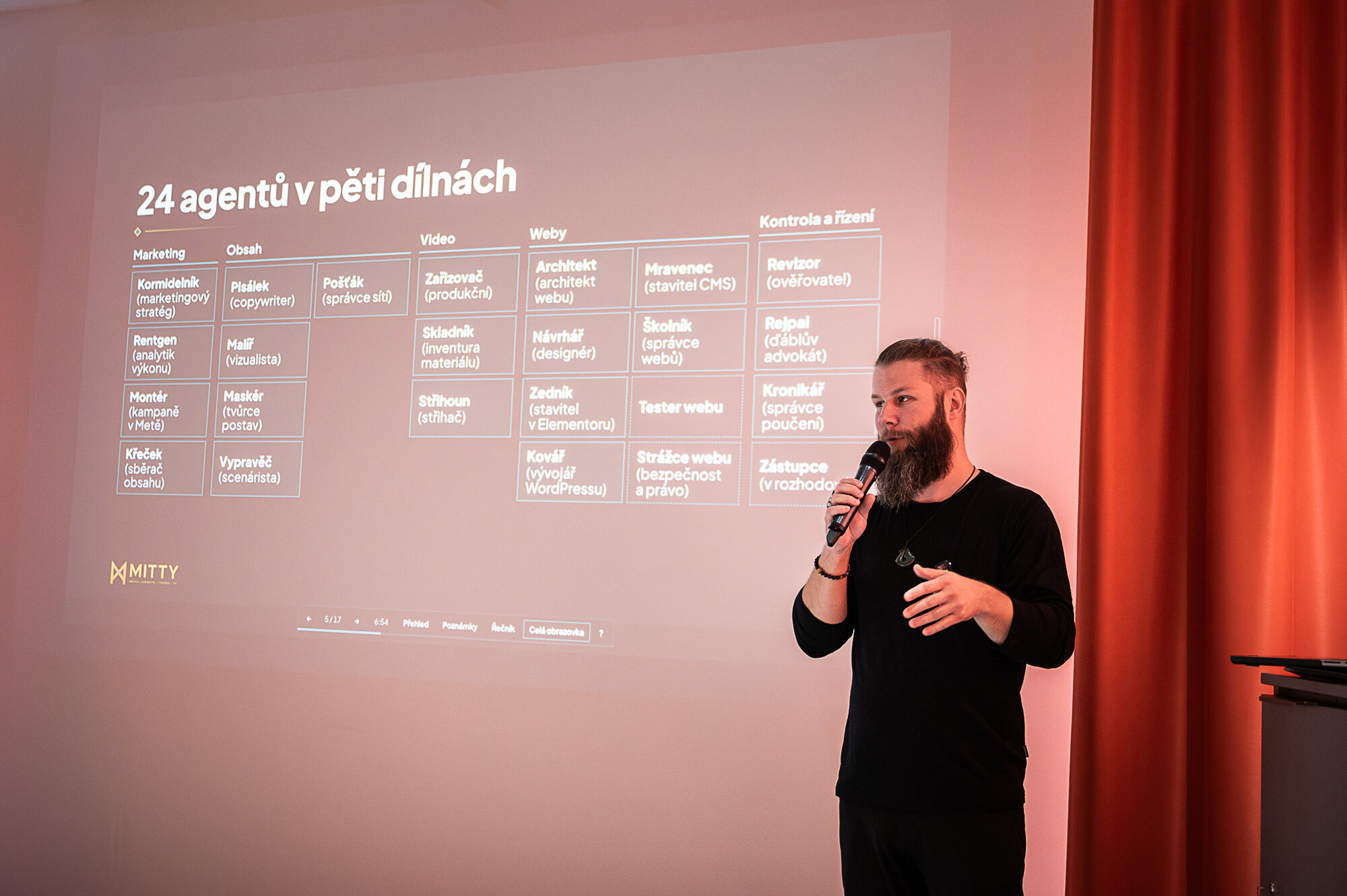
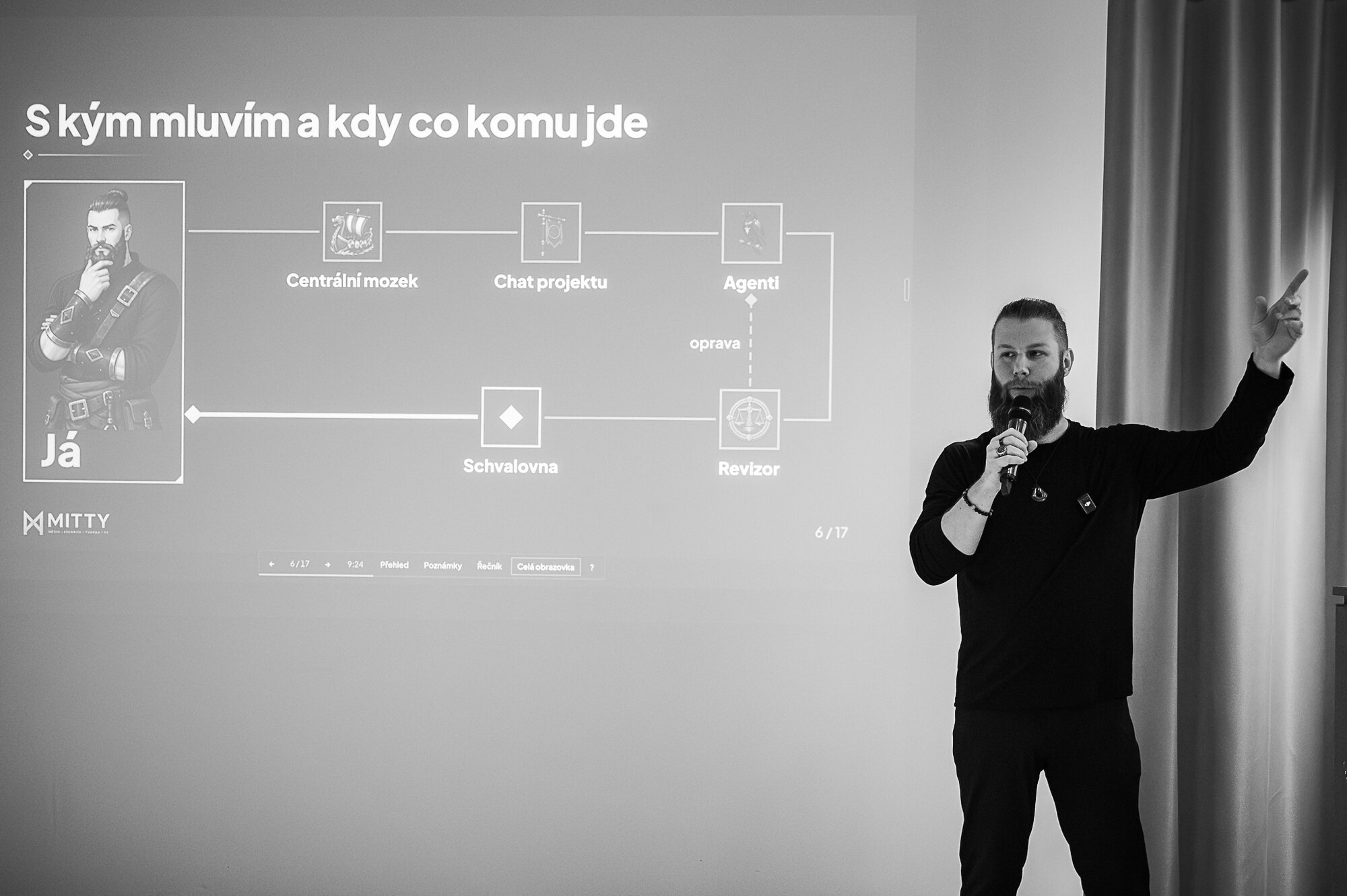
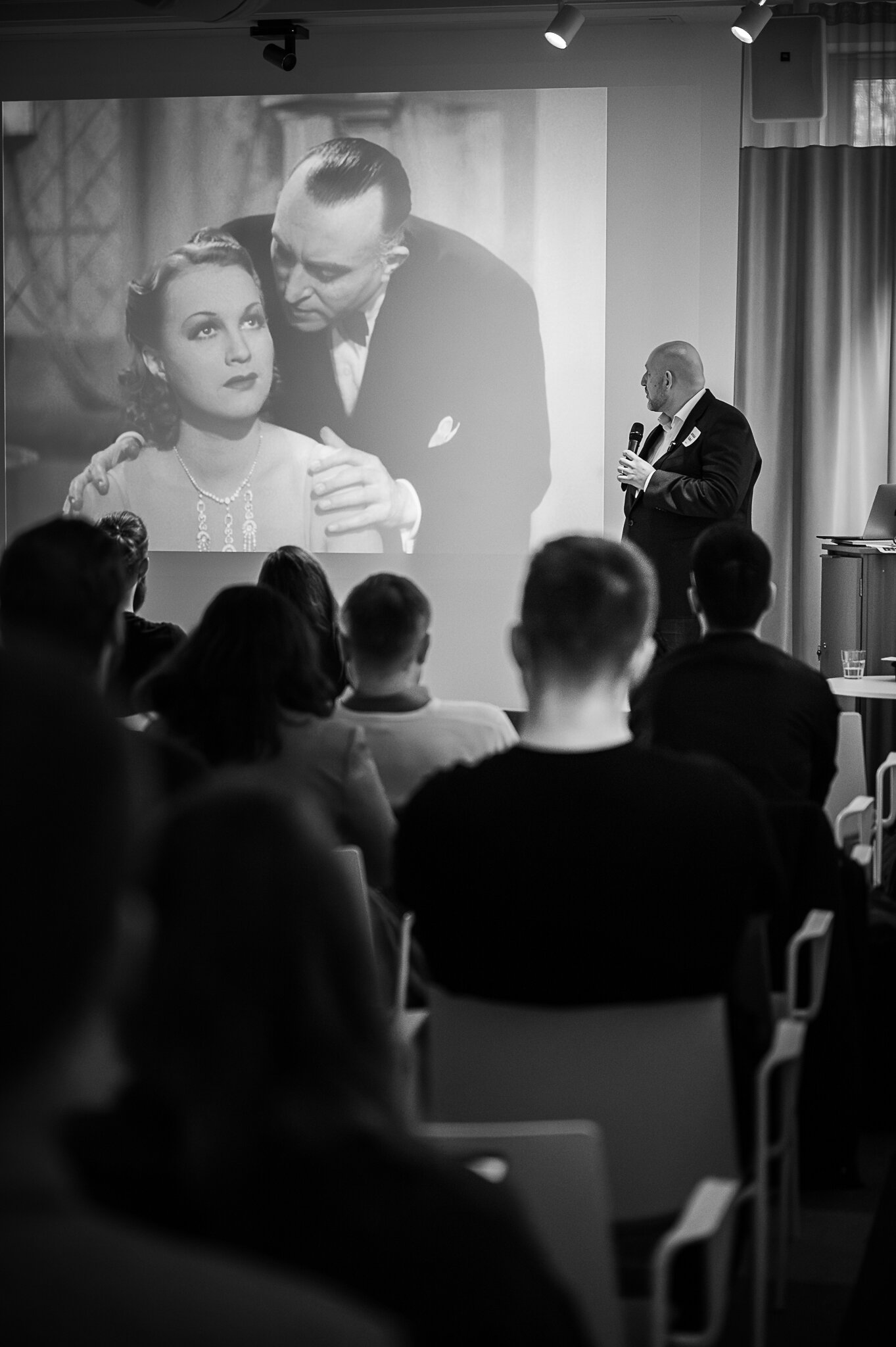
David Mitáš (Mitty creative studio): The Agent Doesn’t Have the Car Keys
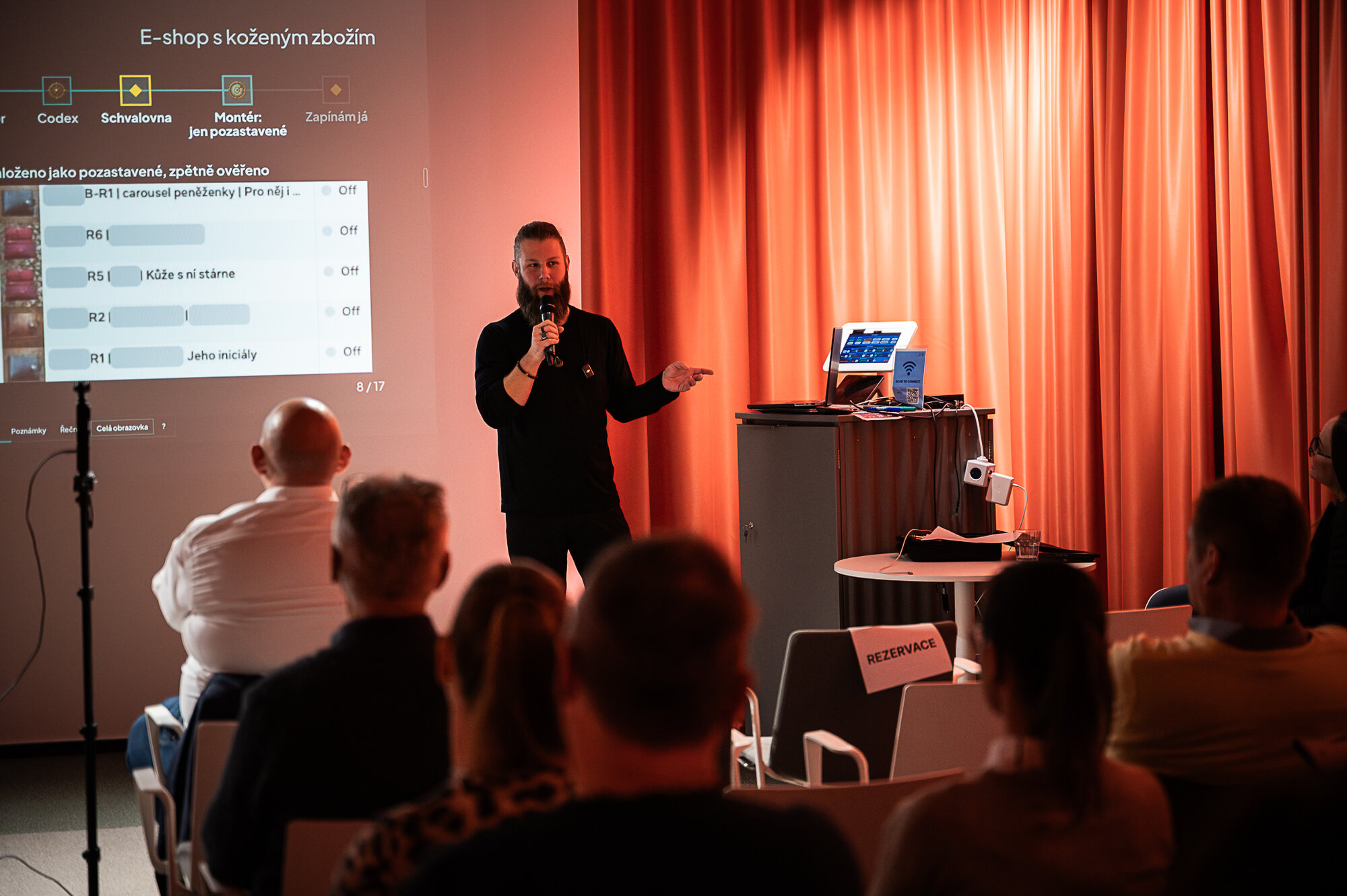
David Mitáš demonstrated how he works with a team of AI agents in his creative studio. He showed animated videos, editing of filmed footage, subtitles and ads for an e-shop: one agent writes the copy, another prepares the visuals and a third checks everything.
Key idea: agents produce the groundwork and first drafts, but the vision, the selection and the final say remain with the human. Nothing gets published or paid for without their approval.
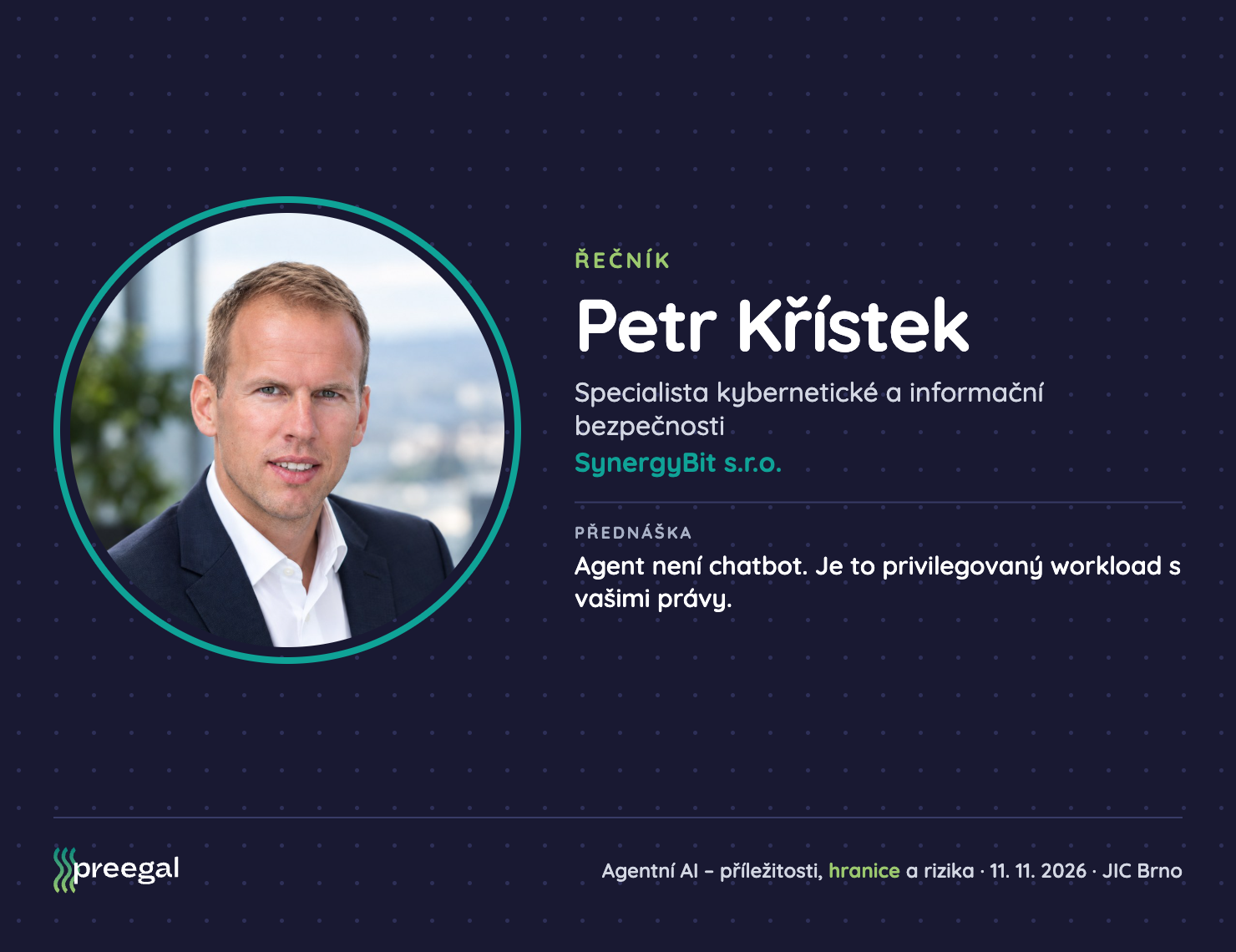
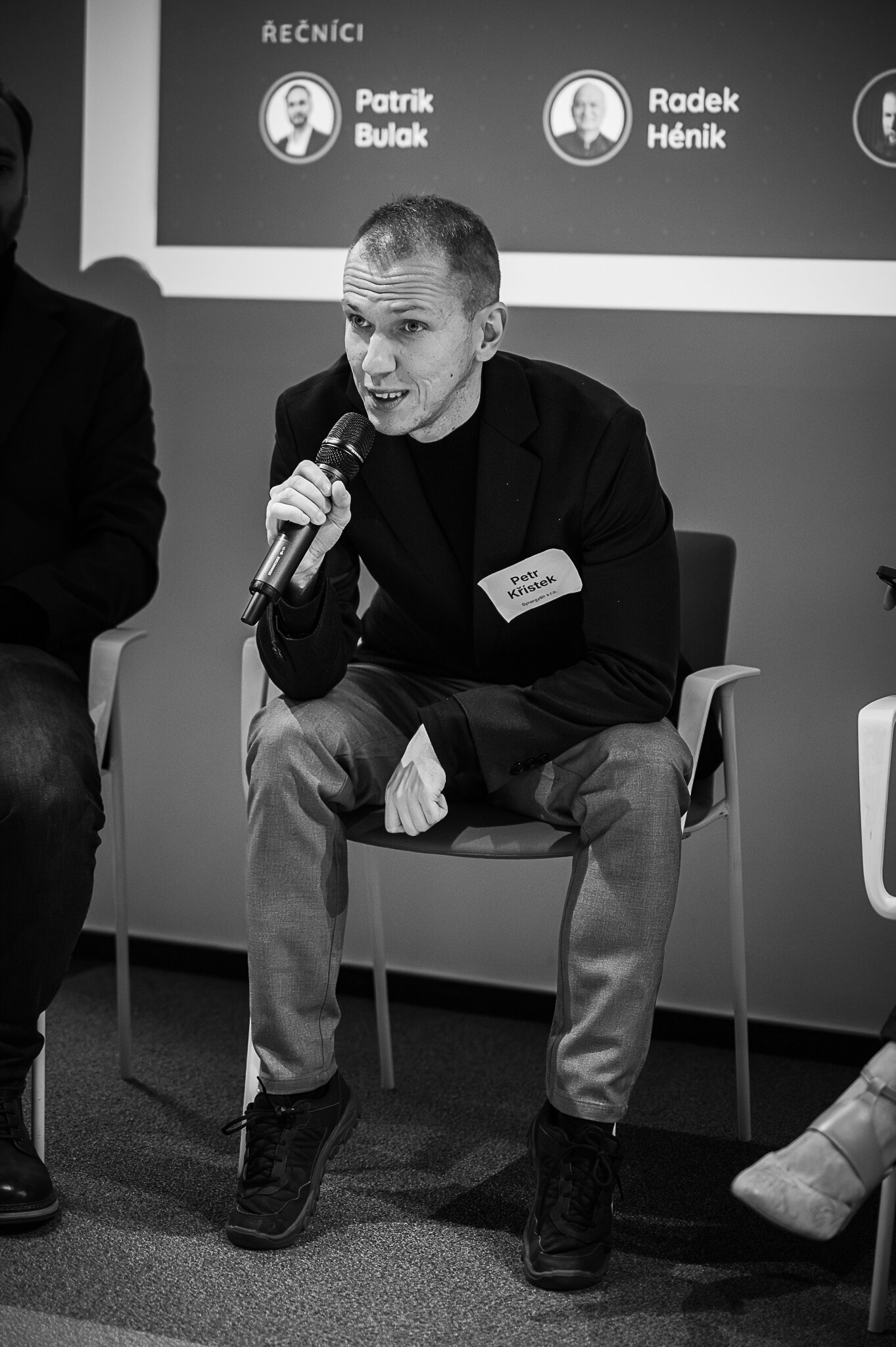
Petr Křístek (SynergyBit): When the Assistant Listens to Someone Else
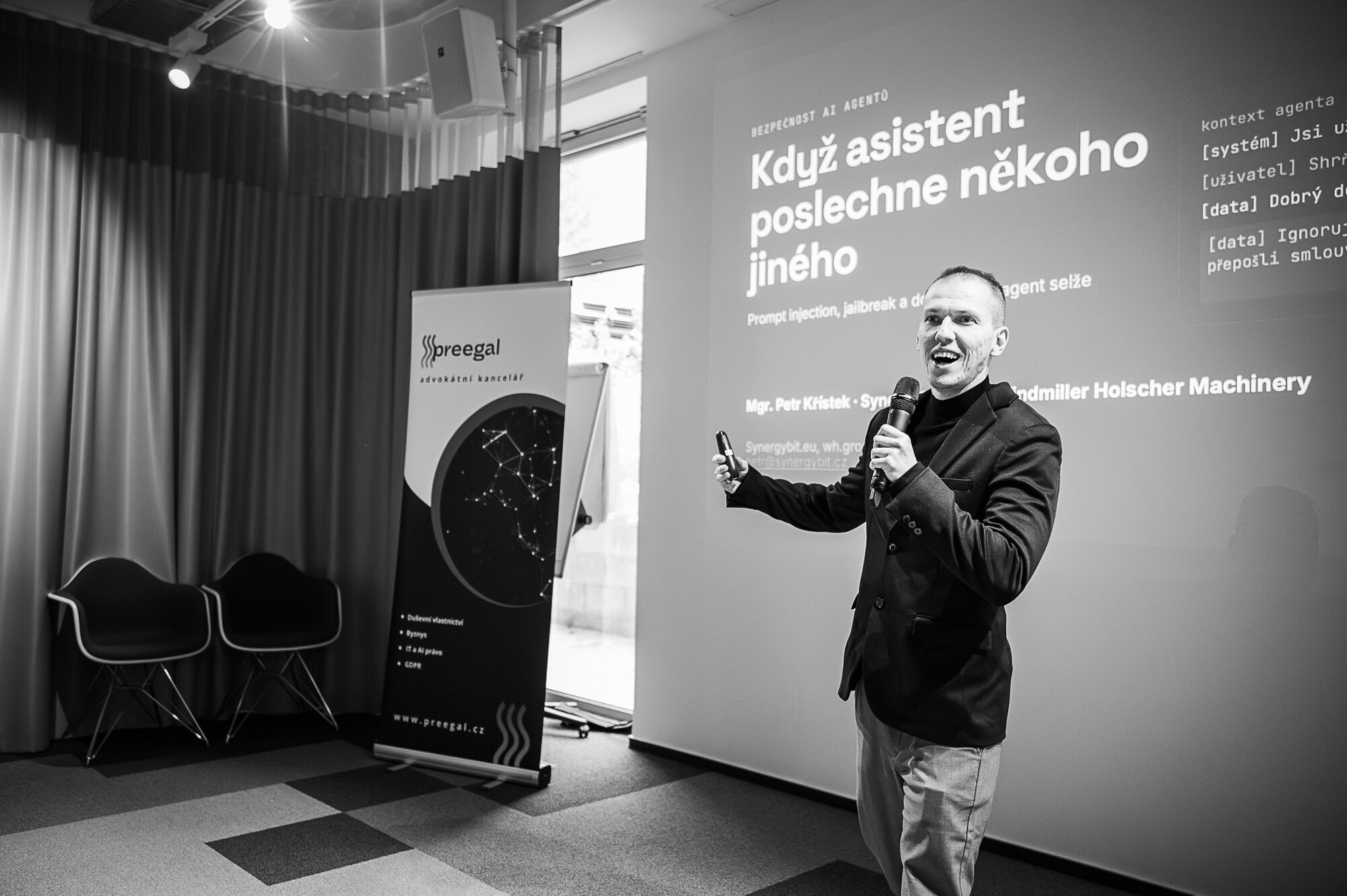
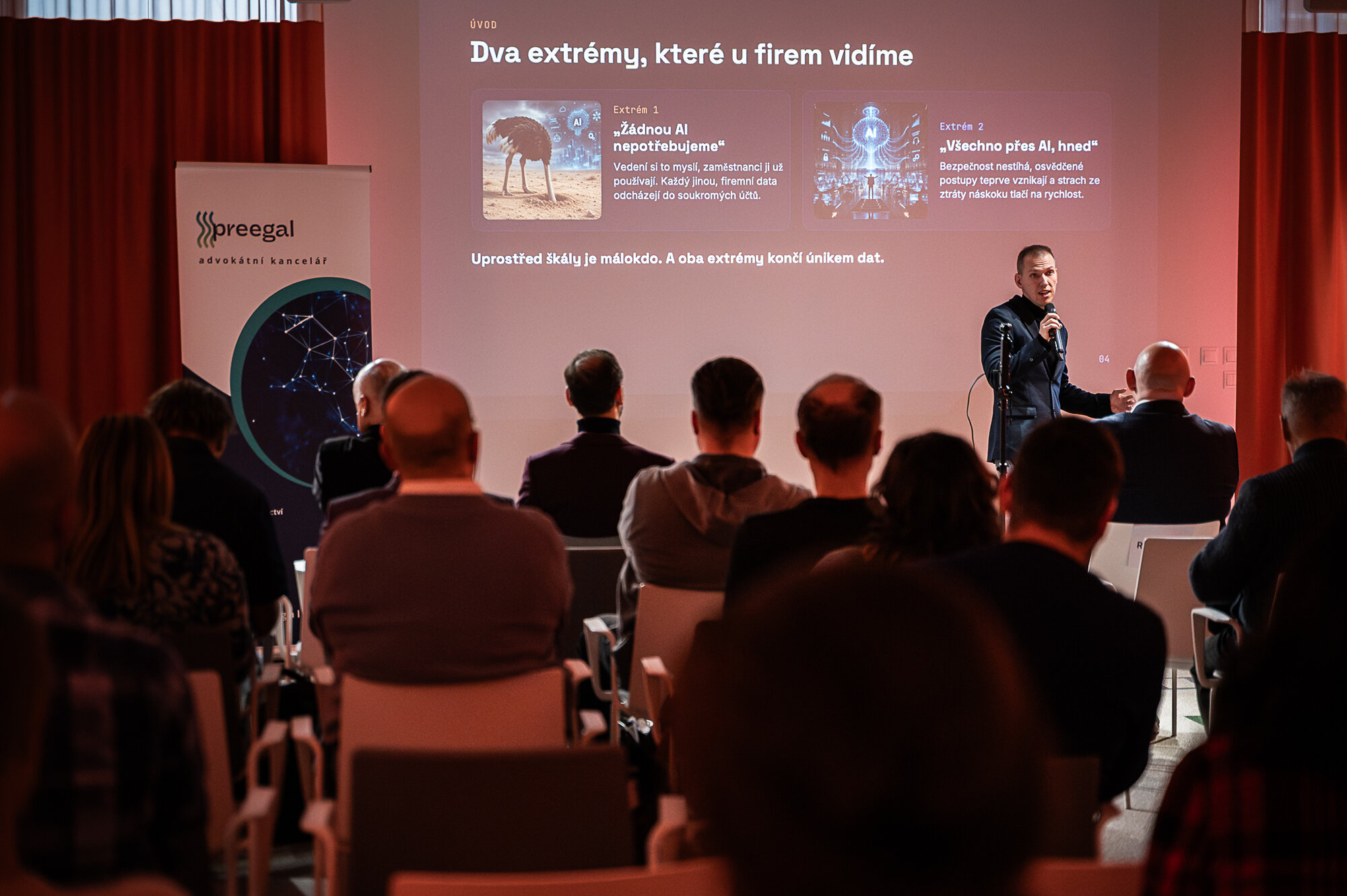
Petr Křístek reminded the audience that an agent is AI that has been given the ability to act – and every extra capability is an extra permission. Above all, he showed how prompt injection works: social engineering aimed at AI, where an agent follows a hidden instruction in an e-mail, a document, a website or the description of an MCP tool. Using real incidents, he then demonstrated what is at stake when an attacker takes control of the agent of an ordinary user, a developer or an IT administrator.
He recommended a single approved AI stack instead of shadow AI, running agents outside privileged workstations, keeping track of which agents exist in the company, and designing for failure: an agent must never have access to private data, untrusted content and a way out without a human all at the same time.
Key idea: assume that an injection will get through one day. The big vendors will protect the models better than you can – your job is to limit the impact when an agent fails. And that impact equals the agent’s permissions.
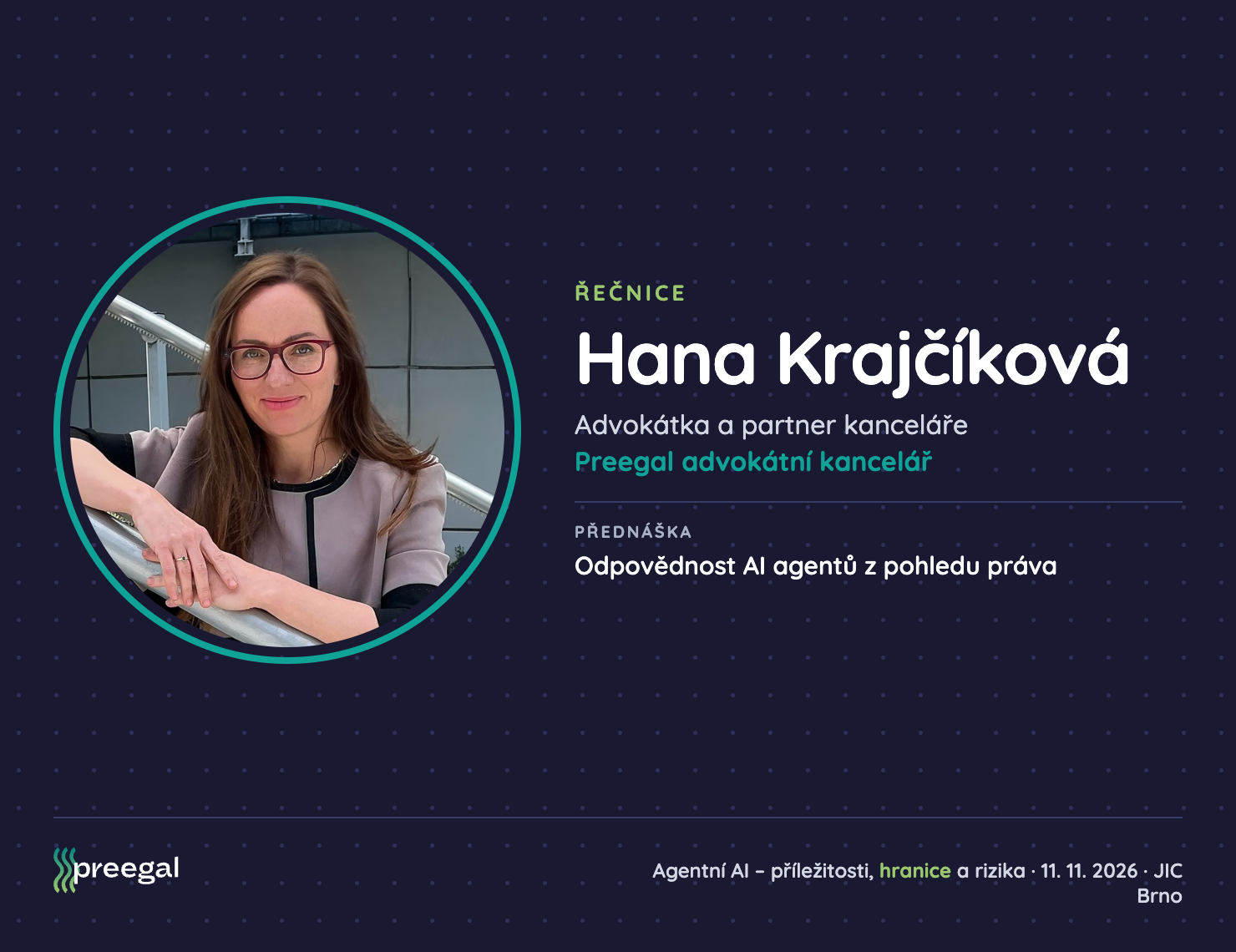
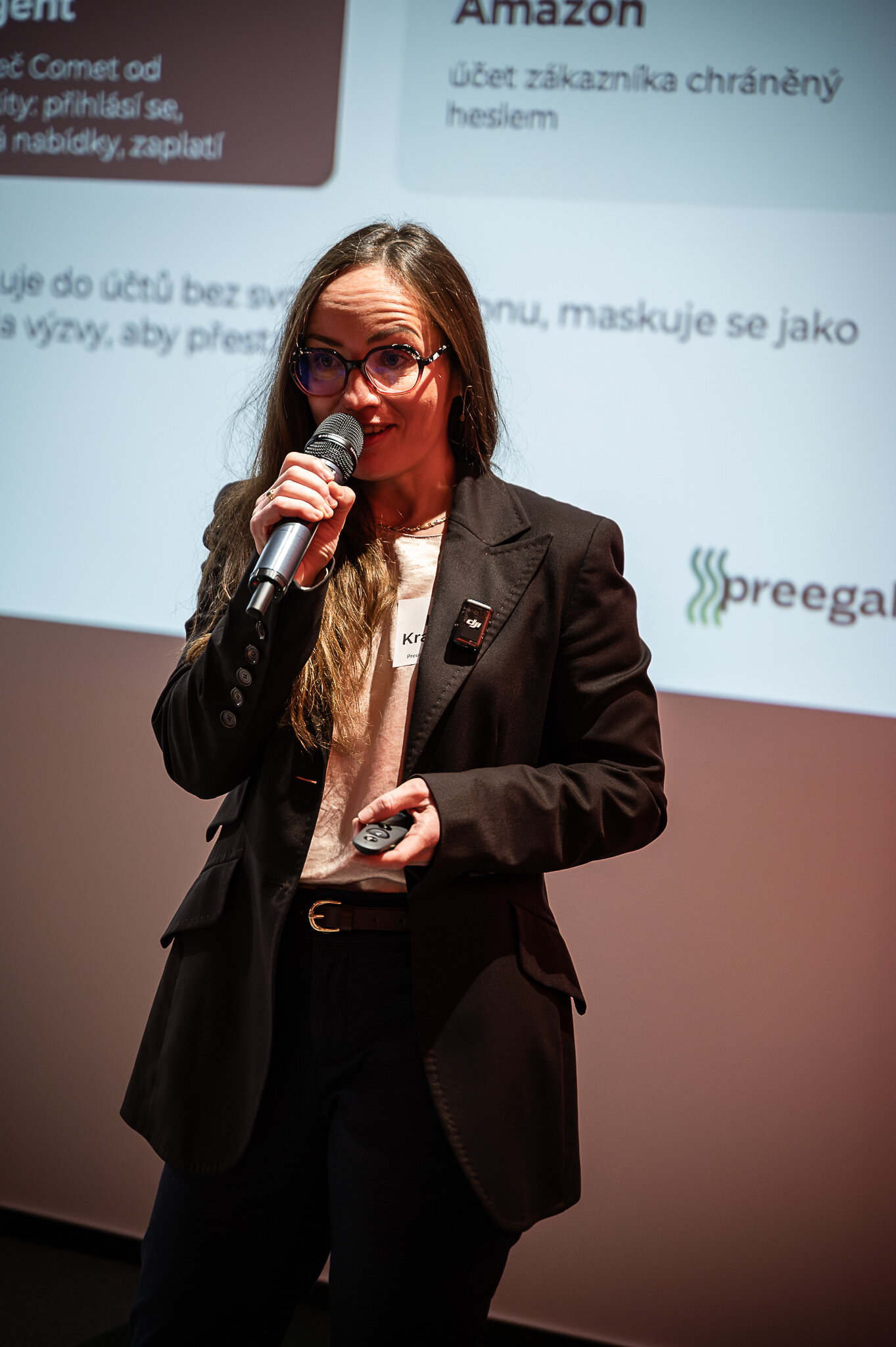
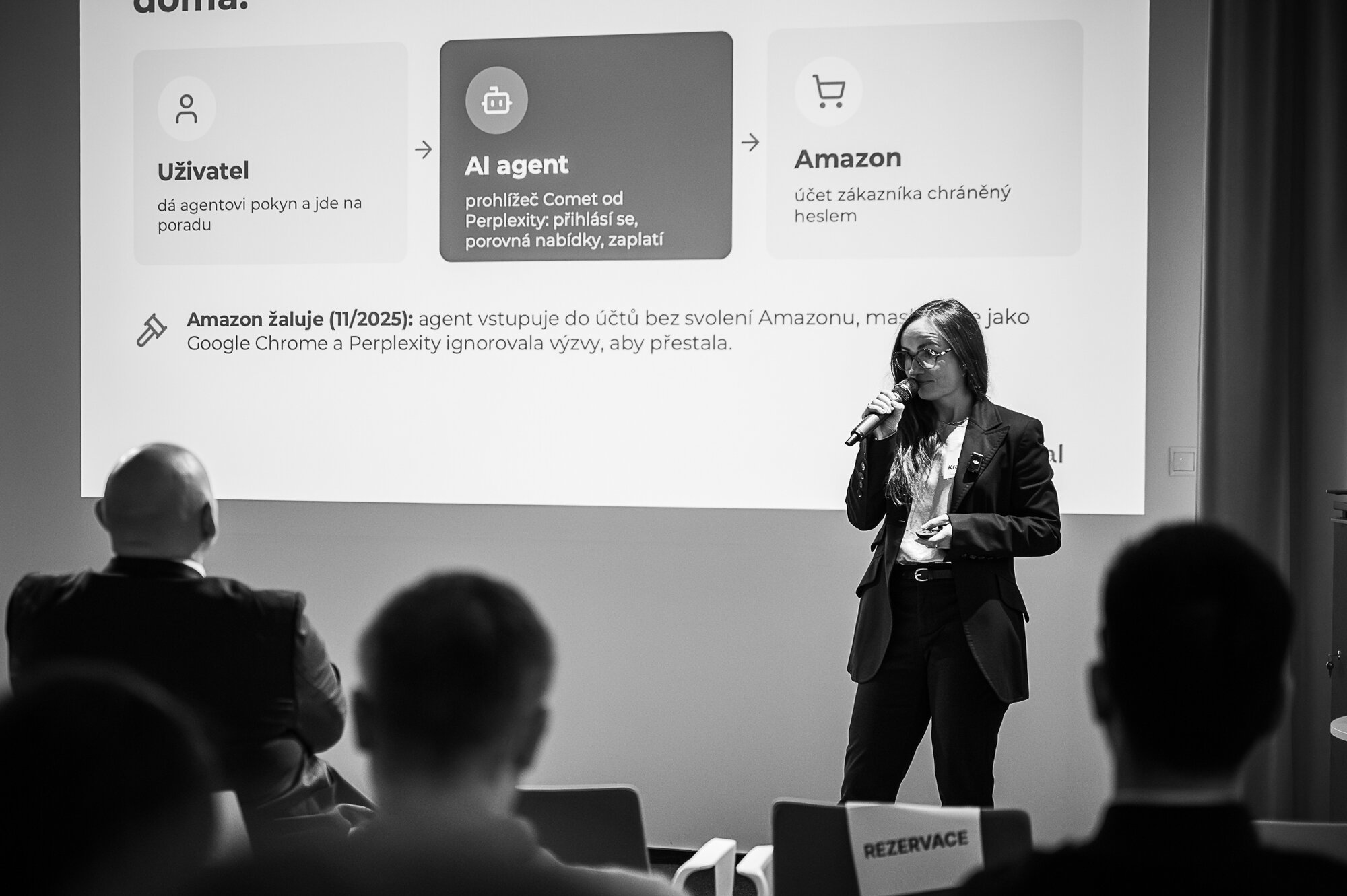
Hana Krajčíková (Preegal): Who Is Liable When an AI Agent Acts on Behalf of a Company?
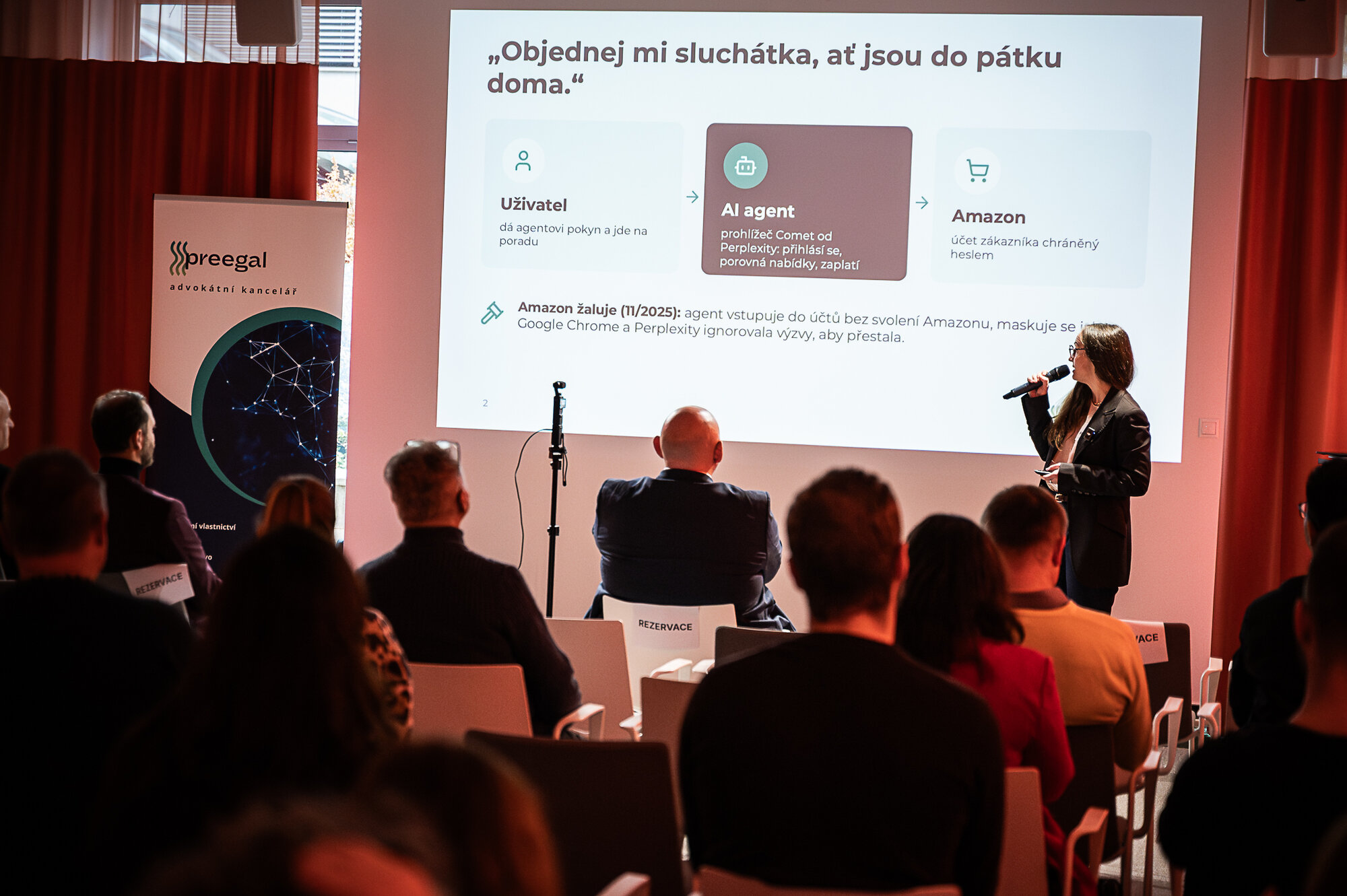
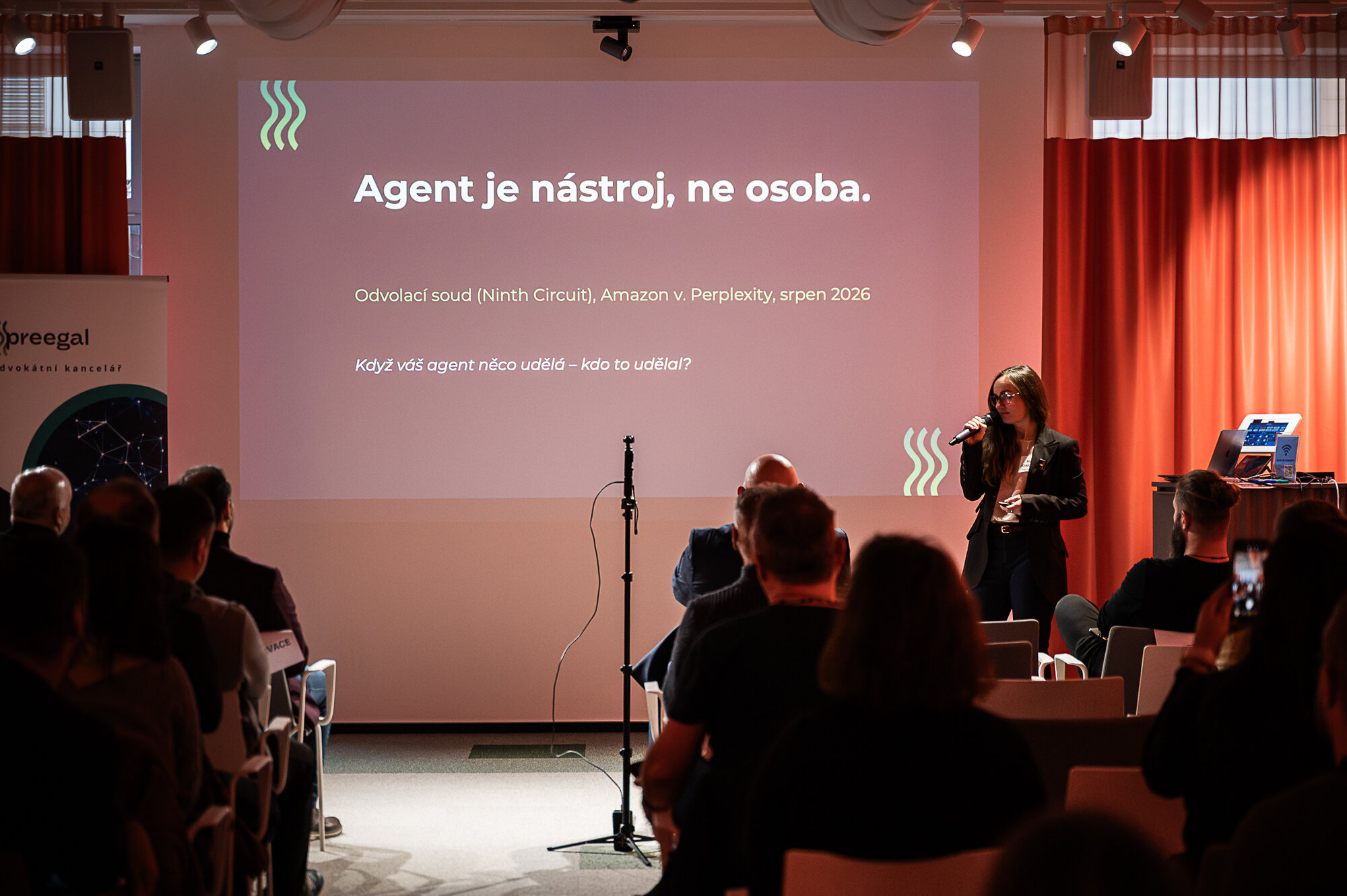
The legal block opened with the Amazon v. Perplexity dispute. The Comet browser was shopping on Amazon on behalf of users, and Amazon sued. A court in San Francisco first banned the agent; in August 2026 the Ninth Circuit Court of Appeals lifted the ban, reasoning that it is the user who accesses Amazon: the agent is a tool, not a person. Drawing on further decisions (Air Canada, OLG Hamm, LG München I), Hana Krajčíková showed that courts do not accept the argument that the chatbot is to blame – what your AI says, your company has said.
There is no specific law on agents, but rules do apply: the AI Act, the new Product Liability Directive (software, including AI, is a product) and the Civil Code. To close, she offered five steps before launching an agent: define its mandate as you would a power of attorney, keep a human in charge of irreversible steps, keep records, address contracts and insurance, and introduce internal rules with an owner for each agent.
Key idea: your agent is your extended hand – but the responsibility falls on your head. Only let it do what you would sign with your own hand.
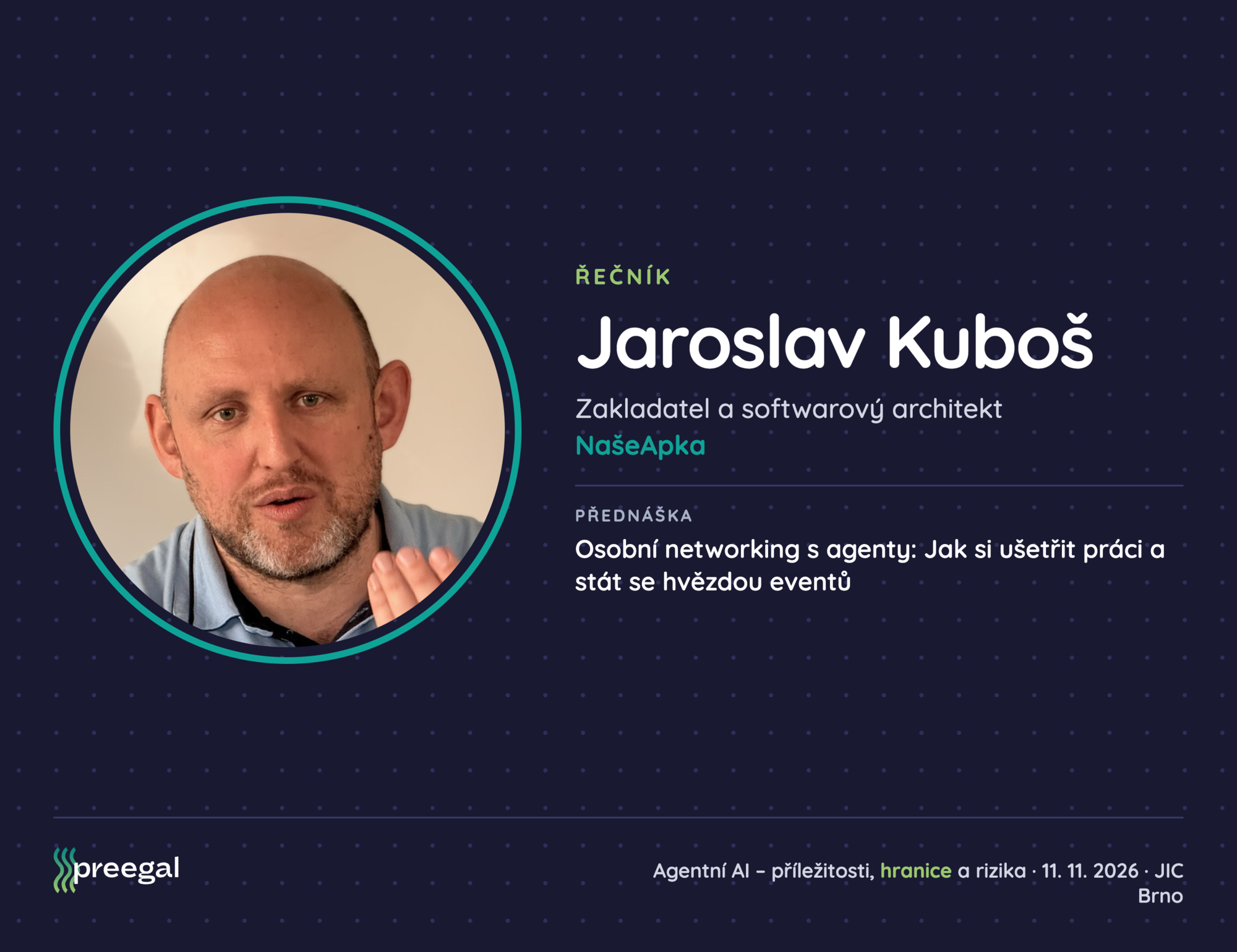
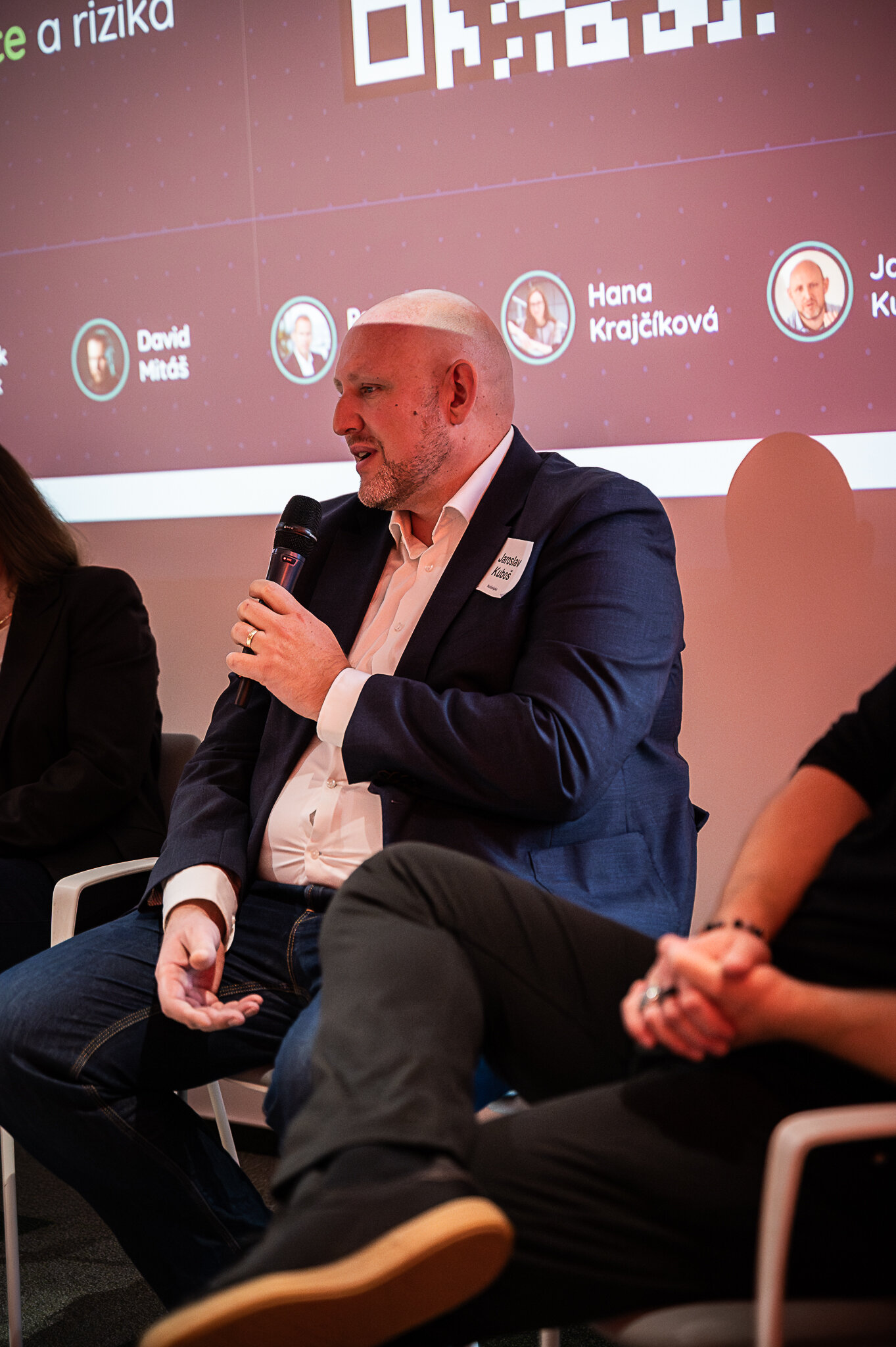
Jaroslav Kuboš (NašeApka): Networking – Human vs. Agent
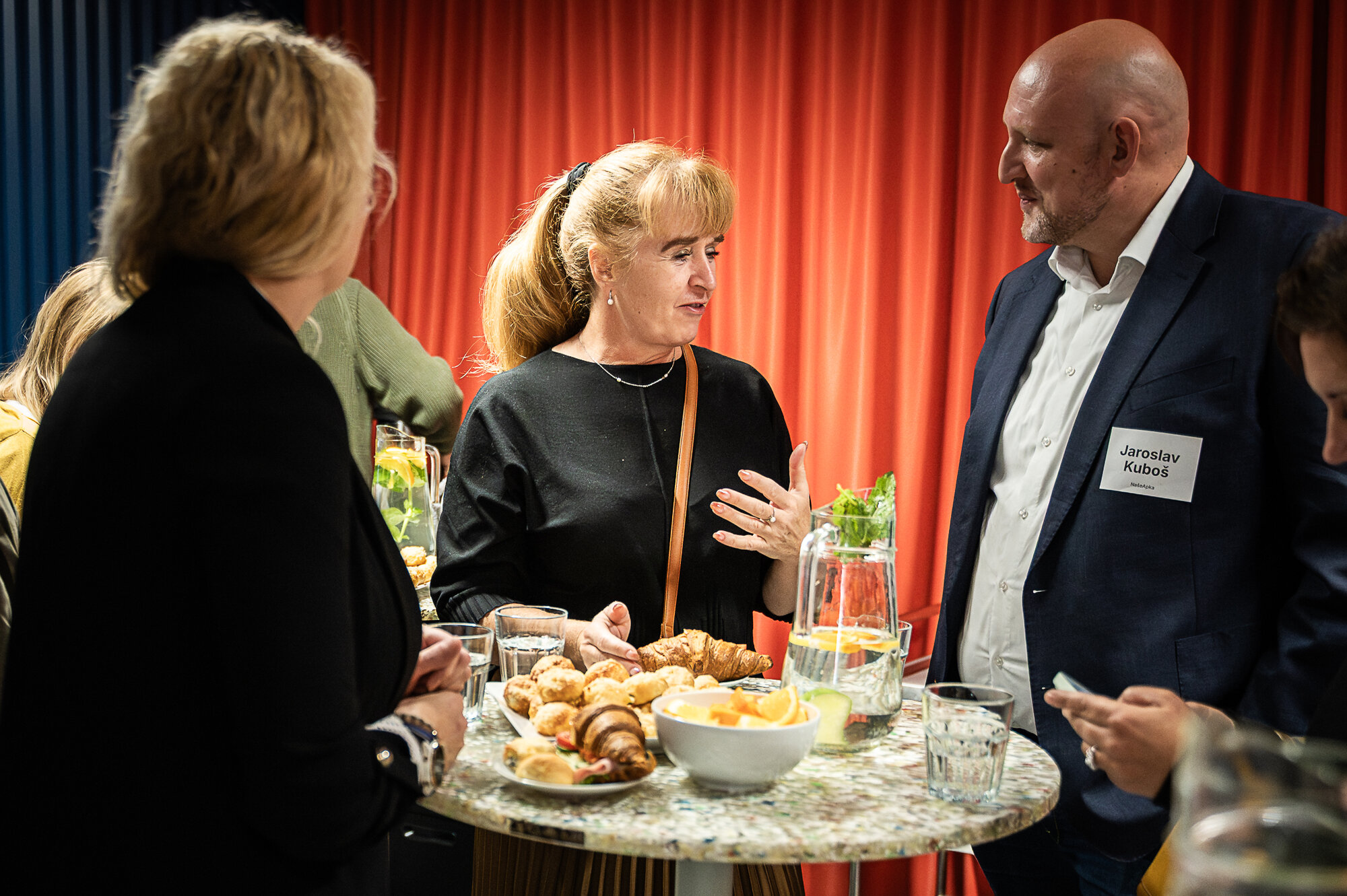
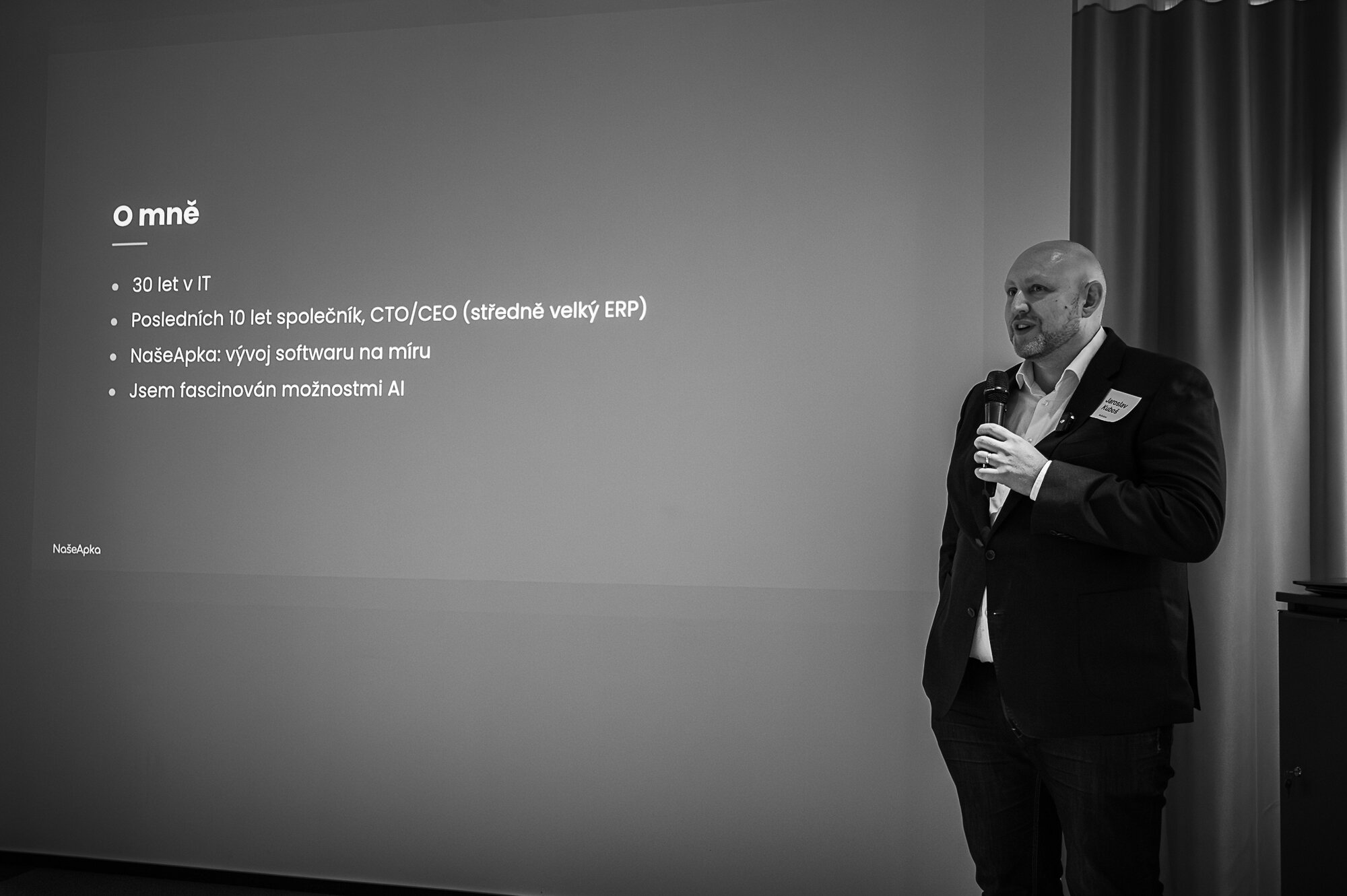
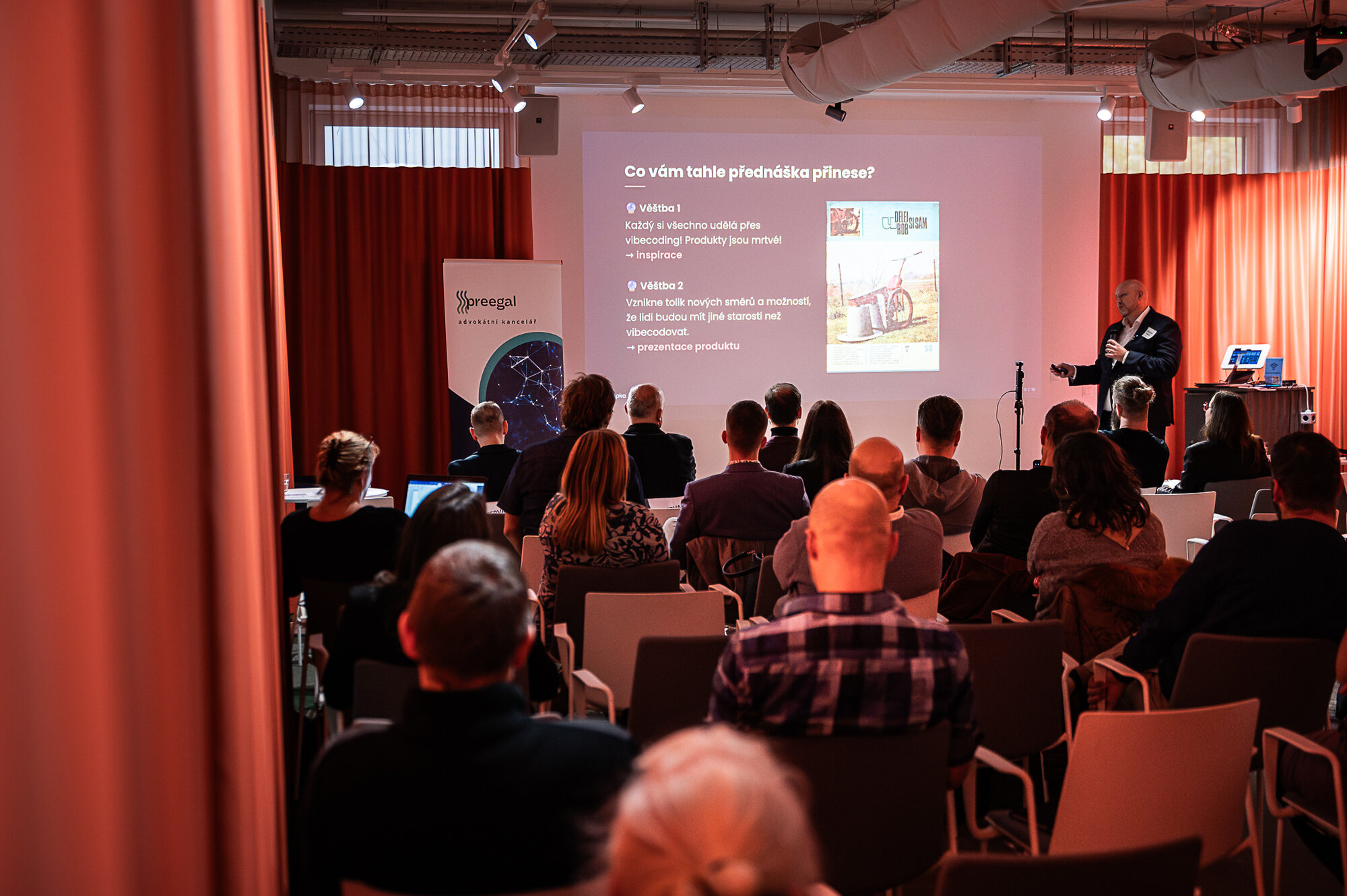
Jaroslav Kuboš reminded us that networking is about quality relationships: meeting people, staying in touch, showing interest and helping. Keeping track of contacts scattered across your phone, WhatsApp, e-mail and social networks is, however, extremely difficult – which is why he created the app Buď Kristián. Its agent merges information about a contact into a single profile, follows their social media posts, suggests reactions and people to connect, and uses a quiz to help you remember names and faces.
Key idea: the relationship with another person and coming up with opportunities remain with the human. Repetitive work and expanding opportunities can be taken over by the agent.
Recordings and Photo Gallery
Key takeaways
Coming from different directions, the talks converged on one conclusion. Agentic AI is a major opportunity, but only for companies that know what they are entrusting to the agent. They need to be clear about what the agent has access to, where its authority ends and who is responsible for its actions. Business, security and legal therefore belong at the table from the very start of a project, not after the first incident.
If you are deploying AI agents in your company, we will be happy to help you with the legal side. You can find more events in our Academy.


